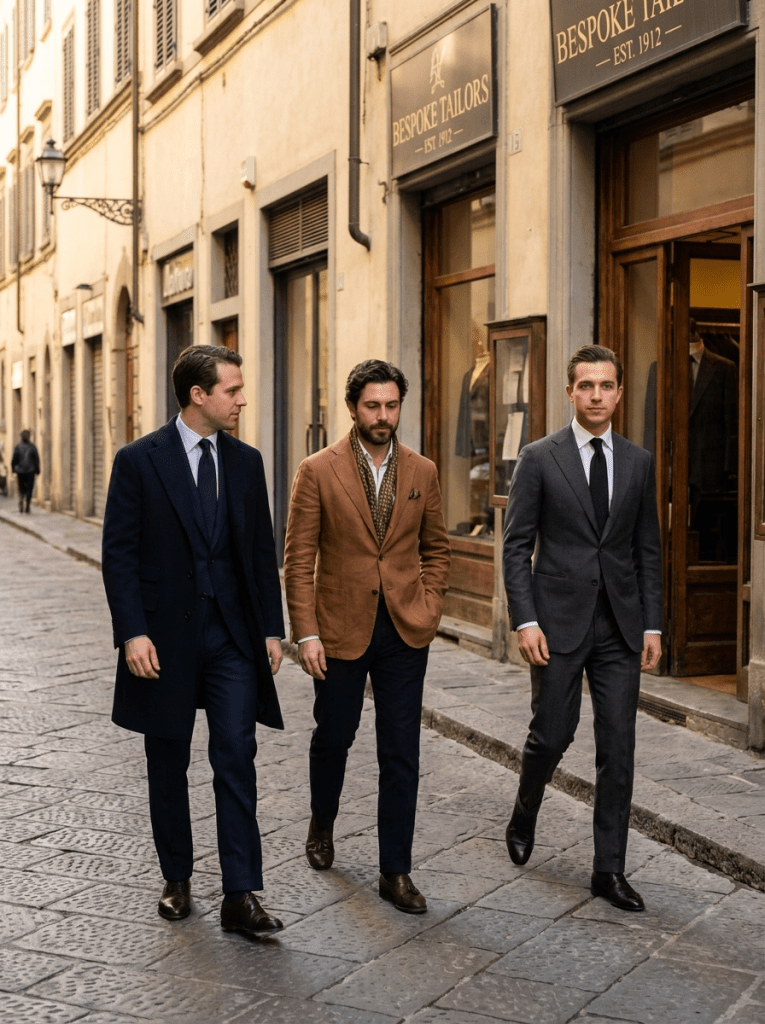
Savile Row and Naples represent two of the most respected tailoring traditions in the world. One is structured, formal, and commanding. The other is soft, relaxed, and expressive. This guide breaks down the difference so you can choose the tailoring style that actually fits your body, climate, lifestyle, and personal taste.
Savile Row vs. Naples: Which Tailoring Tradition Is Right for You?
If you are serious about custom suits, bespoke tailoring, or made-to-measure clothing, you will eventually run into one of the great menswear debates: Savile Row or Naples. Both traditions are iconic. Both have shaped how men dress for business, weddings, travel, formal events, and daily life. But they are not interchangeable.
Savile Row tailoring, rooted in London, is known for structure, sharpness, and authority. It gives the wearer a clean, controlled, almost architectural silhouette. Naples tailoring, born in southern Italy, is known for softness, movement, and ease. It feels lighter, more relaxed, and more expressive.
The real question is not which tradition is “better.” That is too simple. The better question is this: which one works for your body, your climate, your profession, and the way you want to be seen?
The Philosophy Behind Each Tradition
Every tailoring tradition begins with a philosophy. Savile Row and Naples both produce beautiful suits, but they solve different style problems. Savile Row asks, “How can the garment refine, strengthen, and formalize the body?” Naples asks, “How can the garment move with the body while still looking elegant?”
Savile Row: British Structure and Precision
Savile Row tailoring was shaped by British military dress, formal city clothing, and the culture of understated authority. The result is a suit that feels controlled and polished. Shoulders are more structured. The chest has more support. The waist is shaped with intention. The jacket often creates a longer, stronger line through the torso.
This is why Savile Row-style tailoring works so well for boardrooms, finance, law, politics, formal weddings, and ceremonies. It does not chase attention. It commands it quietly. It is the tailoring equivalent of a steady handshake and a locked-in presentation.
Naples: Italian Softness and Sprezzatura
Neapolitan tailoring developed in the warmer climate of southern Italy. Heavy structure did not make sense in that environment. The answer was softness: lighter canvassing, natural shoulders, minimal lining, breathable fabrics, and a jacket that follows the body instead of reshaping it too aggressively.
Naples is often associated with sprezzatura, the art of looking polished without looking like you tried too hard. It is elegant, but not stiff. Stylish, but not uptight. It works especially well for travel, warm weather, dinners, creative industries, outdoor weddings, and men who want refinement without feeling boxed in.
Savile Row gives you armor. Naples gives you ease. The smartest choice depends on whether you want your suit to sharpen your presence, soften your movement, or land somewhere between the two.
Side-by-Side Comparison
The easiest way to understand the difference is to look at how each tradition handles the major parts of a suit. Shoulders, canvas, lapels, armholes, fabric weight, and overall attitude all change the way the garment feels on the body.
| Feature | Savile Row | Naples |
|---|---|---|
| Shoulders | Structured, often padded or roped for a clean, commanding line. | Soft, natural, and often shirt-like with a relaxed shoulder expression. |
| Construction | More structured chest, stronger canvas, and a more formal internal build. | Lighter canvas, minimal lining, and a softer interior construction. |
| Silhouette | Elongated, shaped, upright, and formal with controlled waist suppression. | Shorter, softer, more relaxed, and closer to natural body movement. |
| Lapels | Clean, classic, and moderate in shape. Often restrained and precise. | Often wider with more curve and personality, especially on sport coats. |
| Armholes | High and close for a refined silhouette and crisp fit. | High but easier through movement, built for comfort and mobility. |
| Overall Feel | Supportive, shaping, formal, and almost armor-like. | Light, breathable, expressive, and easy to wear. |
| Best Fabrics | Heavier wools, flannels, tweeds, worsteds, and structured cloths. | Lightweight wool, linen, fresco, hopsack, cotton, and cashmere blends. |
| Ideal Climate | Cooler climates, year-round business wear, fall and winter dressing. | Warmer climates, spring and summer wear, travel, and relaxed elegance. |
| Style Message | Authoritative, traditional, polished, and powerful. | Effortless, stylish, approachable, and quietly confident. |
Signature Details
Both tailoring schools have recognizable details. Some are structural, while others are visual signatures that trained menswear eyes notice immediately. These details are not random. They exist because each tradition was designed around a different lifestyle.
Savile Row Hallmarks
- Clean, military-inspired lines
- Structured shoulder expression
- Strong waist suppression
- Fuller canvas through the chest
- Elegant double-breasted options
- Working buttonholes, also called surgeon’s cuffs
- Timeless, understated finishing
Neapolitan Hallmarks
- Spalla camicia, or shirt-like shoulder
- Barchetta, or boat-shaped breast pocket
- Tre bottoni su due, or three-roll-two button stance
- Curved patch pockets
- Minimal lining or unlined interiors
- Soft chest construction
- Hand-finished details with more personality
Savile Row Style: Structure and Authority
Savile Row is ideal for men who want their suit to create presence. If your goal is to look taller, sharper, more formal, or more commanding, this tradition is the better starting point. The shoulder structure can visually broaden the upper body. The chest construction can clean up posture. The jacket length can add verticality. The waist shape can create a more defined silhouette.
This is why British-style tailoring feels so natural in conservative professional environments. A banker, attorney, executive, groom, or public-facing leader often needs clothing that reads serious before a word is spoken. Savile Row styling does that without looking flashy.
The tradeoff is that structure can feel less casual. A heavily structured jacket may not be the first thing you reach for on a summer vacation or a relaxed dinner. It performs best when the setting calls for polish, authority, and a traditional sense of elegance.
Choose Savile Row If You Want:
- A more formal and commanding silhouette.
- A suit that works beautifully in finance, law, politics, ceremonies, and formal business.
- Cleaner shoulder structure and a stronger chest line.
- A garment that feels polished, traditional, and long-lasting.
- A suit that can become a reliable professional uniform for years.
Naples Style: Softness and Ease
Naples tailoring is for men who want elegance without stiffness. The shoulder is softer, the construction is lighter, and the garment feels more relaxed on the body. It is still tailored, but it does not look severe. It lets the wearer move, breathe, and settle into the clothes.
This is especially useful for warm climates, travel, resort weddings, creative workplaces, and social events where a structured business suit might feel too rigid. A Neapolitan jacket can look natural with an open-collar shirt, lightweight trousers, loafers, denim, or soft knitwear.
The tradeoff is that Naples tailoring may not project the same level of formality as British tailoring. For conservative boardrooms or black-tie-adjacent events, a softer jacket may feel less commanding. But in the right setting, it looks impossibly cool.
Choose Naples If You Want:
- Maximum comfort and movement.
- A lighter jacket for warmer weather or travel.
- A relaxed but refined silhouette.
- More expressive details and softer styling.
- A suit or sport coat that pairs well with casual pieces.
Which One Is Right for You?
The right choice depends on your lifestyle first. A suit should not just look beautiful on a hanger. It should make sense in the rooms you actually enter. Someone who spends most of his week in formal meetings may benefit from the architecture of Savile Row. Someone who travels often, lives in a warm climate, or dresses in a creative environment may reach for Naples more often.
Body type matters too. Men with sloped shoulders may appreciate the structure of a British-style jacket. Men who dislike restriction may prefer the softness of Neapolitan construction. Men with athletic builds may need a careful balance: enough structure to frame the shoulders, but enough ease to avoid pulling across the chest and arms.
Best for Formal Work
Savile Row is the stronger choice for finance, law, boardrooms, government, black-tie-adjacent events, and conservative business settings.
Best for Warm Weather
Naples is the stronger choice for summer events, destination weddings, travel, outdoor dinners, and relaxed business casual wardrobes.
Best for Power Dressing
Savile Row wins when the goal is authority, structure, height, and a more formal visual message.
Best for Easy Elegance
Naples wins when the goal is movement, comfort, softness, and a less rigid approach to tailoring.
Fabric, Climate, and Daily Wear
Fabric is where the Savile Row vs. Naples decision becomes practical. A structured British suit in heavy flannel can be stunning in winter, but it may feel heavy in July. A lightweight Neapolitan jacket in linen or fresco can feel perfect in summer, but it may not deliver the same gravity in a formal winter boardroom.
If you live in a cooler climate or need one suit that works for serious professional settings, a midweight wool with some structure is often the safest choice. If you live somewhere warm or need a travel-friendly garment, a softer make with breathable fabric may serve you better.
The smartest wardrobe is often not one-note. A man may own a structured navy suit for important meetings, a charcoal suit for formal events, and a soft Neapolitan-inspired sport coat for dinners, travel, and weekends. That is not excessive. That is dressing with context.
Fabric Pairings That Make Sense
- Savile Row style: Worsted wool, flannel, cavalry twill, tweed, sharkskin, and heavier year-round cloths.
- Naples style: Linen, fresco, hopsack, lightweight wool, cotton, silk blends, and cashmere blends.
- Hybrid style: Midweight wool, high-twist wool, soft flannel, textured wool-silk-linen blends, and breathable travel cloths.
The Hybrid Approach
Modern tailoring does not have to live in a museum. Many of the best custom suits today borrow from both traditions. You can choose a British-inspired silhouette with a slightly softer shoulder. You can choose a Neapolitan-inspired jacket with a little more chest structure. You can build a suit that honors classic tailoring while still fitting your actual lifestyle.
This hybrid approach is often the best answer for American clients. Many men want a suit that looks sharp enough for business but does not feel stiff. They want structure without looking old-school. They want comfort without looking sloppy. That middle ground is where custom tailoring becomes powerful.
The best suit is not the one that copies London or Naples perfectly. The best suit is the one that takes the right lessons from each tradition and applies them to your body.
How H.M. Cole Helps You Choose
At H.M. Cole, the goal is not to force every client into one house style. The better process is to understand the client first: where you wear suits, how formal your lifestyle is, how your body is built, what climate you live in, and how you want to feel when you put the garment on.
Some clients need a commanding business suit with a more structured shoulder and formal drape. Others need a softer jacket for warmer weather, travel, or a relaxed wedding. Many need both over time. The consultation helps narrow that down before fabric, lapels, lining, and buttons ever enter the conversation.
If you are unsure which direction works best, bring your real schedule into the consultation. Mention your workplace, event type, climate, travel habits, and how often you plan to wear the garment. Those details matter more than chasing an abstract tailoring label.
Ready to Find Your Tailoring Style?
Schedule a fitting with H.M. Cole and build a custom suit that balances structure, comfort, climate, and personal style.
Schedule a Fitting