

Your Local Trusted Bespoke Expert
Built from your measurements. Finished to your vision. Worn with complete certainty.
H.M. Cole bespoke custom suit tailoring, where every suit, blazer, and dress shirt begins with your measurements, your lifestyle, and your vision. No compromises. No off-the-rack adjustments. Just clothing built from the ground up to fit the man you are.
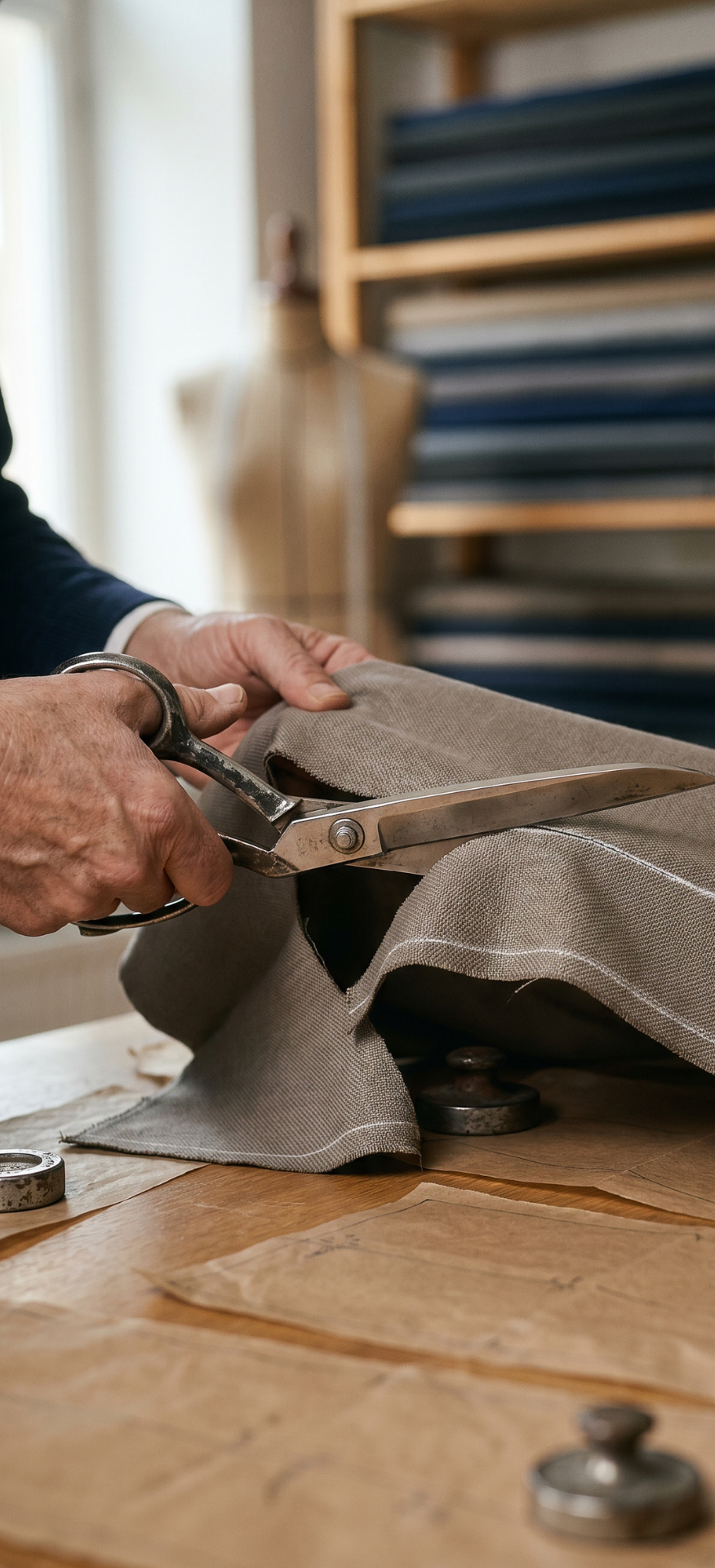
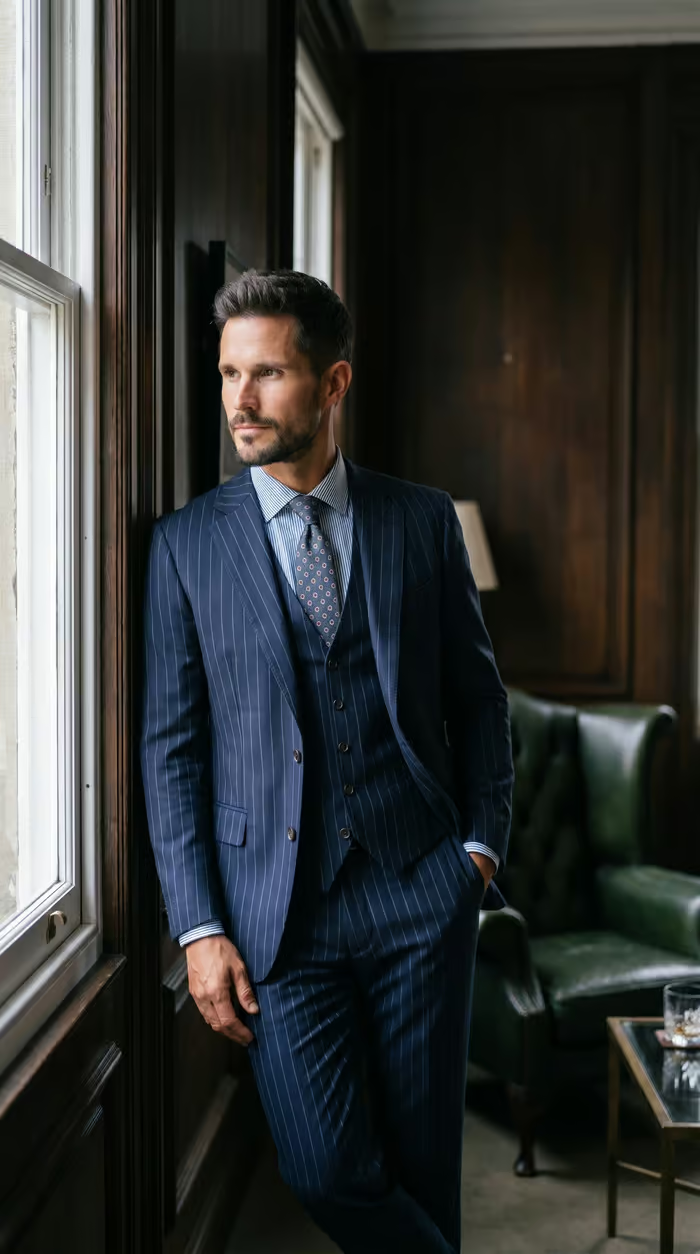
Bespoke Custom Suits & Clothing for Men
Most men have worn a suit. Few have worn one built for them. There is a difference between wearing a suit and wearing your suit. Bespoke is that difference.
At H.M. Cole we do offer custom bespoke suits. Bespoke is our highest tier, and it is priced accordingly. The investment reflects what it actually takes to build a suit that lasts 20 years, molds to your chest over time, and removes every variable from how you present yourself in the rooms that matter.
This is what separates bespoke custom suit from everything else on the market, and it is what every H.M. Cole client experiences from the first fitting forward.
Start with a Bespoke Custom Suit Style
Because One Size Never Fits All. Designed in Every Detail for You
Discover H.M. Cole Bespoke Custom Suit
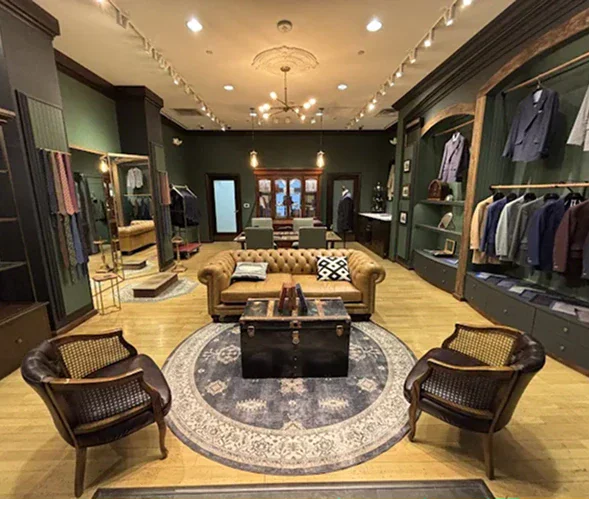
Your personal bespoke clothier is ready to serve you at one of our various locations.
From Our Clients
Experiences shared by those who trust H.M. Cole Bespoke Custom Suits.
Groom, Meridian
James R., Meridian, ID
Executive
I’d been searching for bespoke custom suits in Boise for two years before finding H.M. Cole. Every other option was either a rental shop or an online form. H.M. Cole is the real thing — personal measurements, fabric in your hands, and a consultant who actually understands how a suit should move on a body. I wore my custom tailored suit to a board presentation and haven’t stopped getting questions about it since
James R., Boise, ID
Attorney
William F., Boston, MA
Groom
Marcus T., Columbus, OH
VP of Operations
Paul D., Colorado Springs, CO
Groom
Brandon H., Des Moines, IA
Physician
Kevin F., Wichita, KS
Sales Director
Greg L., St. Louis, MO
Entrepreneur
Tyler B., Spokane, WA
Partner
Michael T., Salt Lake City, UT
CEO
Aaron P., Omaha, NE
Finance Director
Robert C., New York City, NY
Surgeon
Dr. Steven A., Las Vegas, NV
Father of the Groom, Nampa
David K., Meridian, ID
Father of the Groom, Nampa
David K., Meridian, ID
Wedding & Event Specialists
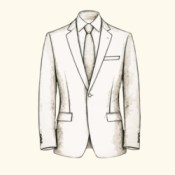
Bespoke Custom Suits
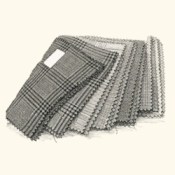
World-Class Mill Fabrics
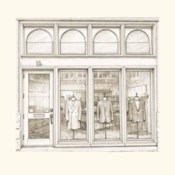
15+ U.S Location
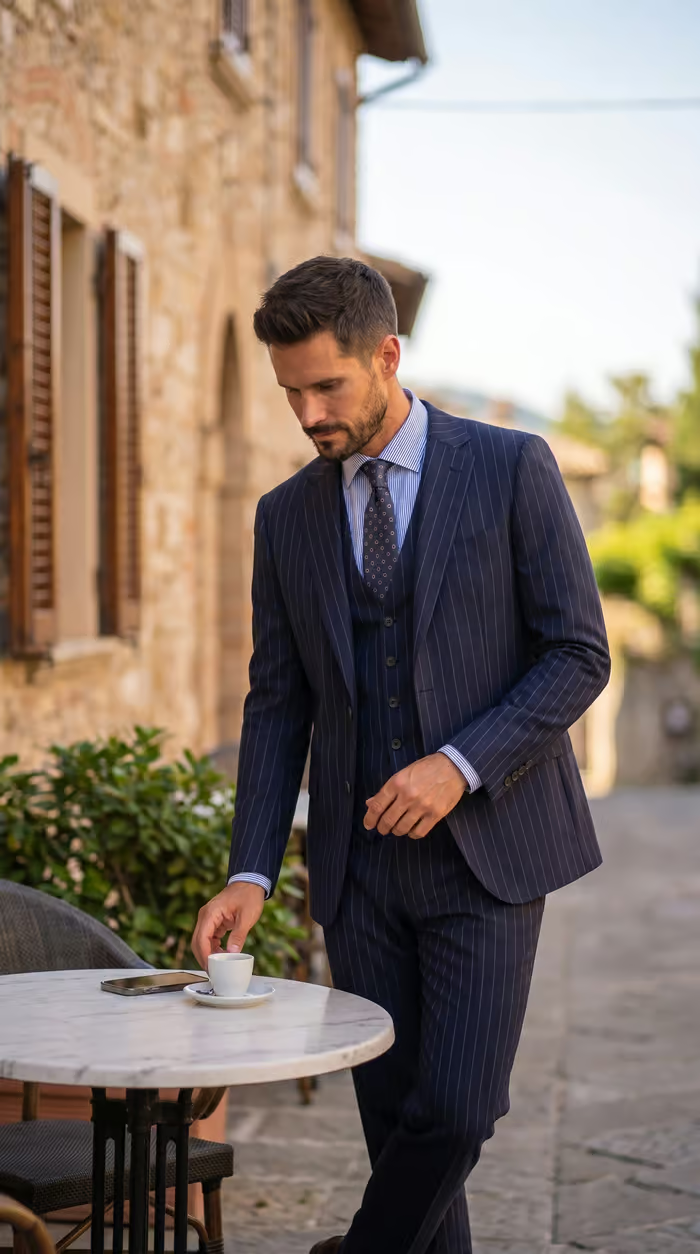
What Makes a Suit Truly Bespoke?
The word bespoke originates from English tailoring tradition, a garment that has been “spoken for,” designed and constructed exclusively for one person. It is not a marketing term. It is a standard of construction.
At H.M. Cole, we take individual measurements per garment. The industry standard for made-to-measure is 5 to 8. That gap is not incidental, it is the entire difference between clothing that fits and clothing that was built for you.
A bespoke suit is not:
A suit pulled from a rack and hemmed at the cuff
A made-to-measure garment adjusted from an existing pattern
A “custom” suit configured online from a dropdown menu
A bespoke suit is:
Drafted from scratch using only your measurements
Built to your posture, proportions, and physical asymmetries
Customized at every detail, from lapel shape to lining to button stance
A garment that fits correctly the first time, because it was designed to
Bespoke vs. Made-to-Measure vs. Off-the-Rack
Most men have never worn a truly bespoke suit. Here is why the distinction matters:
Understanding the distinctions between these three categories is the foundation of any intelligent suit purchase
Ideal for: Executives, professionals, attorneys, entrepreneurs, and anyone who understands that a well-fitted suit is a strategic asset.
Off-the-Rack (OTR)
- Pre-made in standard sizes
- Designed for a statistical average, not a real person
- Alterations are reactive, not structural
- Fit is always a compromise
- Construction is typically fused (glued interlining), degrades within 3–5 years
Made-to-Measure (MTM)
- A standard block pattern is adjusted based on your measurements
- More personalization than OTR, but the foundation is still a template
- Fewer fittings, sometimes just one
- Better fit than OTR, but structural limitations remain
- Quality varies widely by price point
Bespoke
- No template exists, your pattern is created from scratch
- Every structural element is built around your specific body
- Multiple fittings allow iterative refinement
- Full canvas construction (explained below) is standard
- The suit improves and molds to your body over years of wear
- Investment horizon: 15–25 years
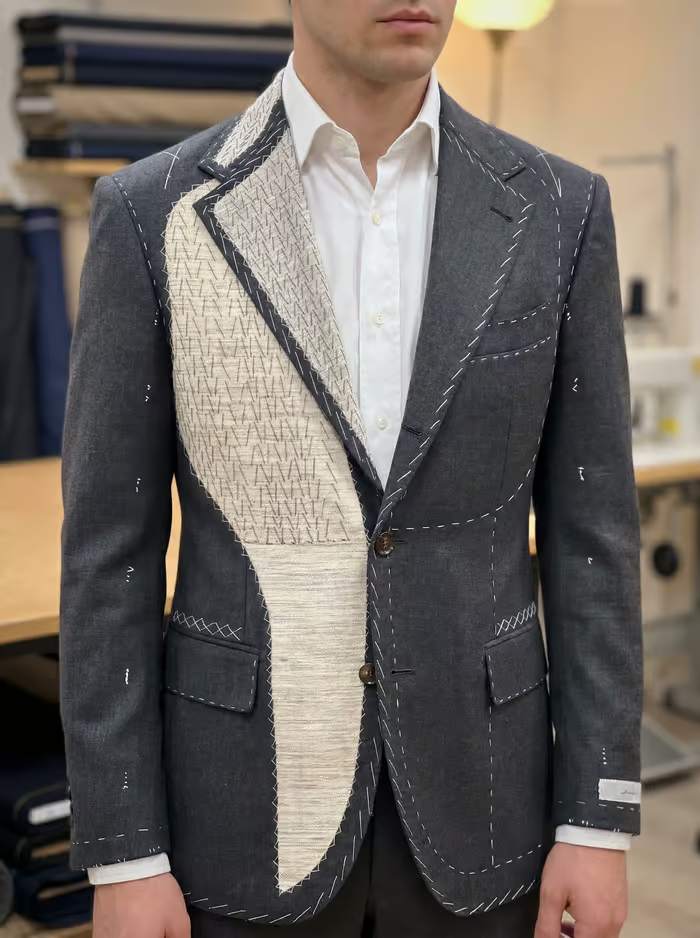
The Details of Bespoke Custom Suits
If your goal is to build a suit entirely from your own measurements, fabric selection, and design preferences, with no pattern borrowed from anyone else’s body, the H.M. Cole team is here to guide you through the experience.
Choose from hundreds of fabrics sourced from the world’s finest mills, including Italian Super 100s through 150s wools, British tweeds, performance blends, and seasonal linens. Every fabric is available to see and feel in person before you commit.
Then customize every structural and aesthetic detail, from the lapel style and button choice to the lining, pockets, stitching, monogram, and overall silhouette.
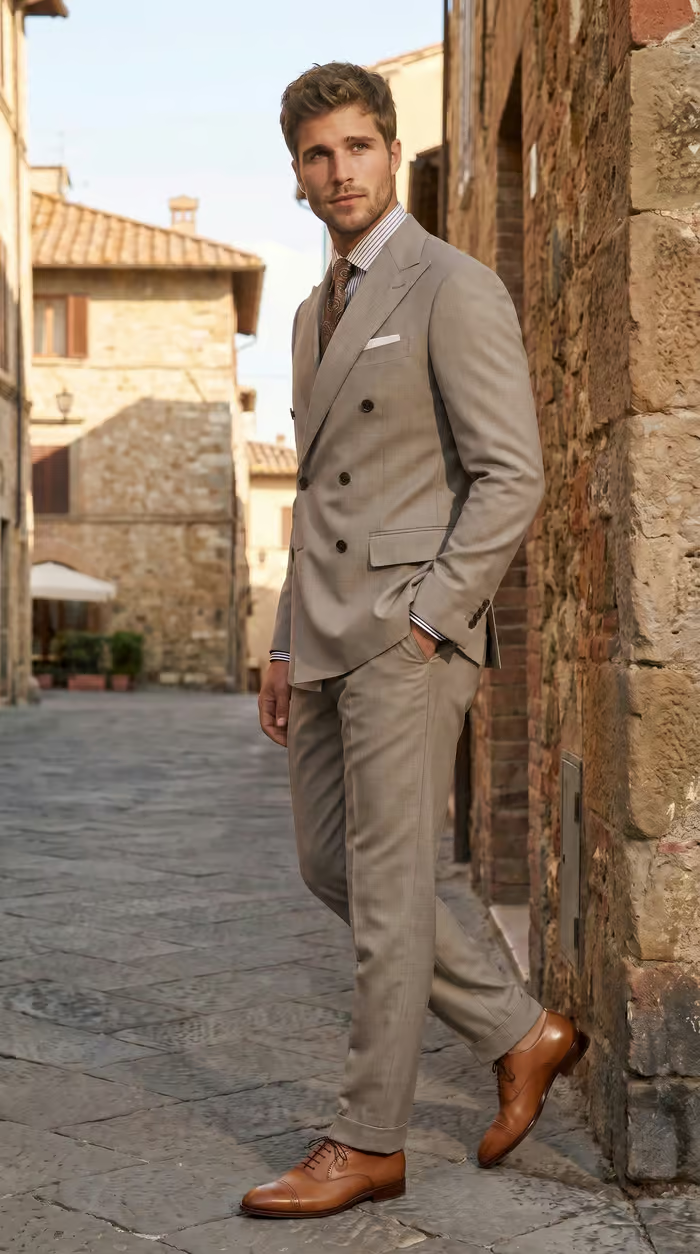
The H.M. Cole Bespoke Custom Suit Fitting Process
Step 1: Consultation & Measurement
- Duration: 60–90 minutes
- Your tailor tQakes 20–40 measurements
- Posture, asymmetries, and lifestyle are discussed
- Fabric selection begins
- Style preferences, lapel width, button stance, vents, lining, are established
Step 2: Toile Fitting (3–5 weeks later)
- A test garment in inexpensive fabric is constructed
- Structural fit is evaluated before your chosen cloth is touched
- Adjustments are marked directly on the toile
- This is where the real tailoring begins
Step 3: Forward Fitting
- The refined silhouette is assessed in your actual fabric
- Lapels, chest, and shoulder line are finalized
- Subtle corrections are made
Step 4: Trouser Fitting
- Seat, rise, thigh, and break are evaluated in motion
- Trouser construction is adjusted independently of the jacket
Step 5: Final Fitting
- Duration: 20–30 minutes
- Minor finishing adjustments
- The suit is collected
Total timeline: 8–16 weeks. This is not a delay — it is the process. Precision cannot be rushed.
Bespoke Suit measurements:
A bespoke commission is a collaboration conducted across multiple appointments. Each fitting is an opportunity to refine, not merely to approve.
The measurements Taken at H.M. Cole. A complete bespoke measurement session captures:
Neck circumference
Right and left sleeve length (measured independently to account for asymmetry)
Waist
Front chest and back chest
Full chest
Bicep circumference
Hips and seat
Half shoulder and full shoulder width
Wrist circumference
Front jacket length
Trouser waist, outseam, inseam, crotch depth, thigh, and knee
The Fitting Sequence
Each appointment builds on the last. The pattern is archived. Future commissions begin from a position of established knowledge.
- Initial consultation and measurement — Body is mapped. Posture and measurements are analyzed. Style preferences, occasion, and fabric are discussed.
- First fitting — A low quality fabric mock-up is assessed for structural fit before any final cloth is cut.
- First basted fitting — The suit is assembled in the actual fabric; major adjustments are marked.
- Forward fitting — Refinements are incorporated; the garment is closer to finished.
- Final fitting — The completed suit is assessed for finish, balance, and expression.
Suit Styles and Regional Cuts
Single-Breasted vs. Double-Breasted
The choice between single and double-breasted is both aesthetic and functional.
Single-Breasted
- Two to three buttons; the middle button fastens, the bottom never does.
- More versatile across occasions — from business casual to black tie.
- Appropriate to unbutton when seated.
- The default choice for a first bespoke suit.
Double-Breasted
- Four to six buttons; bottom button remains unbuttoned.
- Inherently dressier and more formal in silhouette.
- Remains buttoned when seated — the structure requires it.
- Projects confidence; suits men with a longer torso particularly well.
The Four Primary Cuts
The silhouette of a suit is shaped by the tailoring tradition it draws from. Each tradition reflects a different philosophy of how a man should present himself.
The Four Primary Cuts
American (Sack) Cut: Relaxed, boxy, with minimal suppression at the waist. A single center vent. No shoulder padding. Associated with Brooks Brothers and the Ivy League tradition. Comfortable and unpretentious — appropriate for less formal professional environments. Best accomplished with a heavier weight fabric.
Savile Row (English) Cut: Higher armholes, carved and structured shoulders, pronounced chest, double vents. The jacket is built to project authority. The English drape — a soft fullness through the chest — is its signature. Formal, deliberate, and unmistakably intentional.
Italian Cut: Suppressed waist, minimal or no vents, lightly padded shoulders. The silhouette is close and expressive. Associated with Neapolitan tailoring, which favors soft, unpadded construction and extensive hand-sewing. Elegant in warm climates; less forgiving of weight fluctuation.
Athletic Cut: Developed for men with broader shoulders and a narrower waist. More room through the upper jacket, tapered through the torso. Accommodates a physique that standard blocks cannot.
Buttons and Buttonholes
These details are small in scale and significant in signal.
Sleeve Buttons
- Sleeve buttons should “kiss” — touching slightly, with minimal overlap.
- Functioning buttonholes (surgeon’s cuffs) allow the sleeve to be rolled; a mark of bespoke construction.
- Three or four buttons is standard; four is more formal.
Buttonhole Styles
- Bar-tacked: A rectangular buttonhole with reinforced ends. Clean, casual, and the tack can be hand-finished.
- Rounded-end: An oval buttonhole, typically hand-sewn. The standard for quality tailoring.
- Keyhole: A rectangle with a circular end to reduce stress on the button. Common on heavier fabrics.
Slightly imperfect stitching in a hand-sewn buttonhole is not a flaw. It is evidence of the hand that made it.
Jacket & Chest Pockets Styles
Pockets are functional architecture. Each style carries a different visual weight and formality level.
Jacket Pocket Types
- Bellows pocket: Accordion-pleated sides allow the pocket to expand. Practical; associated with country and sporting wear.
- Piped pocket (besom): A clean slit with fabric folded at the opening. Minimal and formal.
- Flapped besom: A flap that can be tucked away to reveal the piped pocket beneath. Versatile — two looks in one.
- Flap pocket: A standard flap covers the opening. The most common configuration on business suits.
- Hacking pocket: Cut at a slight angle, derived from equestrian dress. Adds visual interest; associated with English country tailoring.
- Patch pocket: The pocket is sewn onto the outside of the jacket, with visible seams. Casual; appropriate for sport coats and linen suits.
- Slant pocket: An angled besom. Slightly more relaxed than a straight piped pocket.
- Ticket pocket: A small additional pocket above the right hip pocket. Originally for train tickets. A considered detail on a bespoke commission.
Chest Pocket
- Positioned on the left breast only.
- Designed for a pocket square, not functional storage.
- Always present on a suit jacket; its absence is a significant omission.
Vents and Lapels
Vents
- Single center vent: Associated with the American cut. Creates a tapered visual line. Practical for seated wear.
- Double vents: Two side vents, standard on English cuts. Accentuates the build when walking; drapes cleanly when seated. The more sophisticated choice.
- No vent: Common on Italian suits. Creates a clean, unbroken back line. Less practical for men who spend significant time seated.
Lapels
- Notched lapel: A V-shaped notch where the lapel meets the collar. The standard configuration for single-breasted suits. Versatile across formality levels.
- Peaked lapel: The lapel points upward toward the shoulder. More formal; standard on double-breasted suits and dinner jackets. Visually it broadens the shoulders and projects authority.
- Shawl lapel: A continuous curve with no notch. Reserved for black tie and evening wear.
Lapel width should be proportional to tie width and shoulder breadth. Neither extreme — very narrow nor very wide — ages well.
Materials: The Foundation of a Bespoke Suit
Fit without fabric is architecture without materials. The cloth you choose determines how the suit moves, breathes, ages, and signals quality to the room.
Wool, The Foundation of Suiting
Wool is the standard for bespoke suits. It breathes, regulates temperature, drapes naturally, and holds its shape across years of wear.
- Super 100s: Durable, structured, excellent for daily wear — the workhorse of quality suiting.
- Super 120s: The recommended starting point for a first bespoke suit — soft enough to feel luxurious, resilient enough for regular wear throughout all seasons of the year.
- Super 150s and above: Exceptionally fine, silky hand feel — best reserved for special occasions; more fragile under daily use.
- Flannel: Brushed wool with a soft, matte finish — ideal for autumn and winter; substantial drape.
- Tweed: Textured, durable, character-rich — country and business casual contexts.
- Fresco: Open-weave wool with excellent breathability — summer suiting without sacrificing structure.
Linen, Summer Authority
- Exceptional breathability in warm climates.
- Natural, deliberate texture — creasing is part of the aesthetic, not a flaw.
- Best in lighter colors: cream, stone, pale grey, navy.
- Blended with wool or silk for added structure and drape.
Cashmere & Cashmere Blends
- Unmatched softness and warmth-to-weight ratio.
- Cashmere-wool blends offer luxury hand feel with improved durability.
- Reserved for cooler months and formal occasions.
- Signals quiet, understated wealth — no logo required.
Silk & Silk Blends
- Exceptional sheen and drape.
- Used in evening wear, tuxedos, and formal suiting.
- Blended with wool for structure; pure silk is delicate and best for special occasions.
- Communicates formality and occasion without effort.
Cotton & Cotton Blends
- Casual suiting and warm-weather applications.
- Breathable and comfortable; less formal than wool.
- Chino-weight cotton for relaxed tailoring; heavier cotton for structured casual suits.
- Blended with linen or wool for improved drape.
Fabric Mills Worth Knowing
The origin of your cloth matters. H.M. Cole sources from mills whose names carry weight in the tailoring world:
- Loro Piana (Italy): The benchmark for fine wool and cashmere; exceptional softness and consistency.
- Holland & Sherry (UK): Over 180 years of suiting cloth; extensive range from workhorse to luxury.
- Scabal (Belgium): Innovative blends and distinctive patterns; favored by discerning clients.
- Dormeuil (France): Legendary for fine wool and luxury blends; a name synonymous with premium suiting.
- Vitale Barberis Canonico (Italy): One of the oldest wool mills in the world; exceptional value at the premium tier.
What to Look for in Fabric Quality
- Hand feel: Quality cloth has a smooth, almost satin-like glide between the fingers — not papery, not synthetic.
- Drape: Hold the fabric up — it should fall naturally, with weight and movement, not stiffen or cling.
- Color consistency: Even dye throughout; no streaking or variation.
- Weave density: Tighter weave = greater durability and wrinkle resistance.
- Sheen: Slight natural luster without glossiness — the mark of quality fiber.