
Camel hair is one of the only luxury fibers whose natural color is more prized than any dye could be. H.M. Cole builds custom camel hair suits and sport coats in that signature warm, golden tan, a fiber with genuine Ivy League pedigree and warmth-to-weight performance that rivals cashmere.
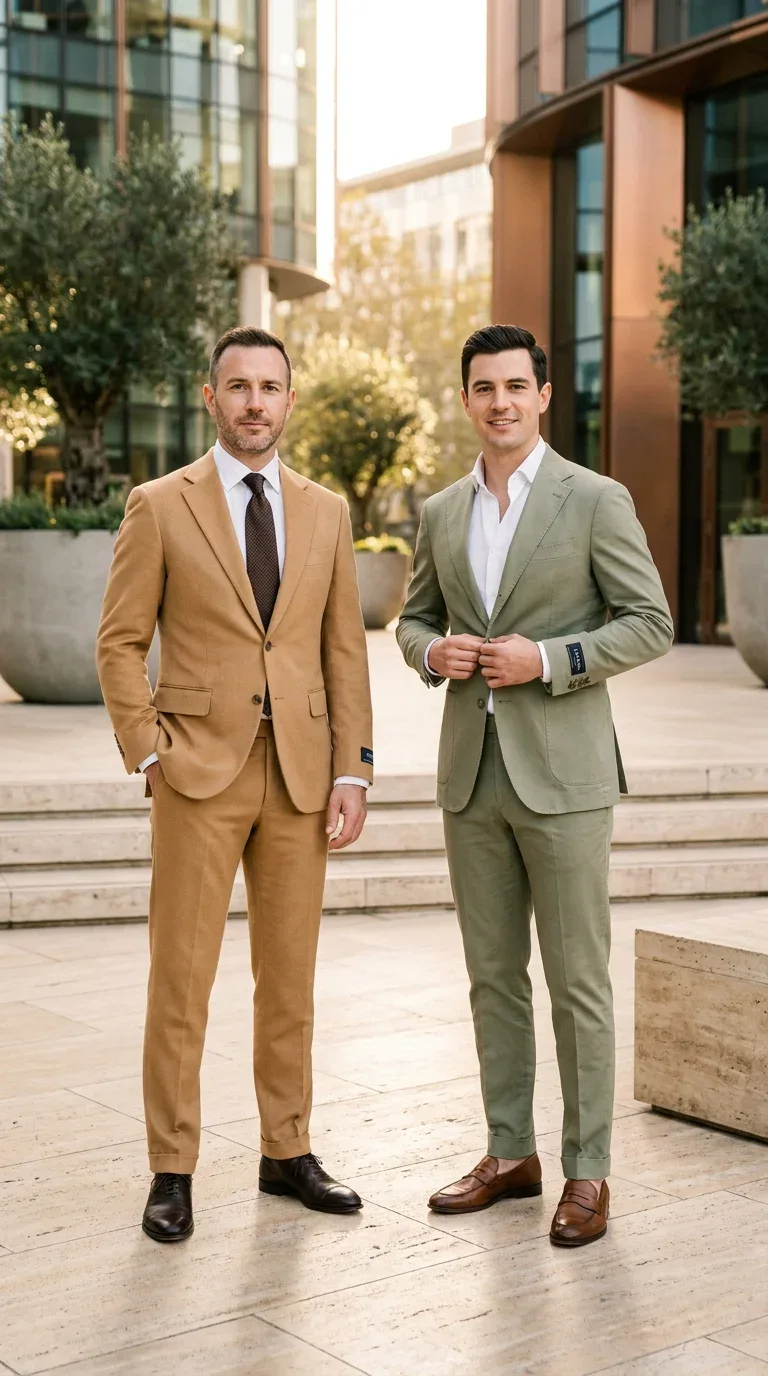
Custom Camel Hair Suit: The Original Ivy League Color
Camel hair comes from the soft undercoat of the Bactrian camel, the two-humped camel native to the Gobi Desert region spanning Mongolia and northern China. Combed out during the spring molting season rather than sheared, the fiber is prized for a warmth-to-weight ratio that rivals cashmere, along with a natural golden-tan color so distinctive that it's traditionally left undyed.
That color, somewhere between honey and toast, became so associated with the fiber itself that "camel" is now a standard color name across fashion entirely, one of the rare instances where a fabric's natural hue defined an entire color category.
At H.M. Cole, a camel hair commission starts with a conversation about warmth and occasion, since camel hair spans everything from a classic polo coat to a soft, blended business suit.
- Step 1: What Makes Camel Hair Different, Source and Natural Color
- Step 2: The Camel Hair Polo Coat Legacy
- Step 3: Understanding Camel Hair Blends
- Step 4: Camel Hair vs. Cashmere, Warmth Without the Fragility
- Step 5: How H.M. Cole Creates Custom Camel Hair Garments
- Frequently Asked Questions
- Book a Private Camel Hair Consultation
Camel hair's color became so iconic that it named itself. Few fibers in tailoring can claim their natural shade is the whole point.
Step 1: What Makes Camel Hair Different, Source and Natural Color
Bactrian camels grow a dense double coat to survive the Gobi Desert's extreme seasonal temperature swings, coarse guard hair on the outside and a soft, insulating undercoat beneath. It's that undercoat, combed out by hand each spring, that becomes camel hair fabric, while the coarser outer hair is generally used for less refined applications.
The fiber's natural warmth comes from the same evolutionary pressure that shaped vicuna and alpaca: an animal built to handle brutal cold efficiently, without excess bulk. Camel hair's insulating properties per unit of weight rival cashmere, while its natural, rarely-dyed color gives finished garments a warmth of tone synthetic or over-processed fabric can't replicate.
Step 2: The Camel Hair Polo Coat Legacy
Camel hair's most iconic garment isn't a suit at all, it's the polo coat, a double-breasted overcoat that originated among polo players in the early 20th century, worn between chukkers to stay warm before returning to the field. The style was adopted by Ivy League students in the 1920s and 1930s and became a defining piece of American collegiate style, a status it's never fully relinquished.
That heritage is part of why camel hair carries a different cultural association than most luxury fibers covered in this guide. Where vicuna signals rarity and Scabal signals innovation, camel hair signals a specific, enduring strand of classic American style, equal parts prep school and old-money ease.
Step 3: Understanding Camel Hair Blends
Pure camel hair is soft and warm but, like cashmere, benefits from blending when used in a garment that needs to hold a tailored shape through regular wear.
Pure Camel Hair
Maximum warmth and the signature natural tan, traditionally reserved for overcoats and polo coats rather than full suiting.
Camel Hair-Wool Blend
Adds structure and durability for full suiting and sport coats, while retaining camel hair's warmth and color.
Camel Hair-Cashmere Blend
Combines two of tailoring's warmest fibers for an exceptionally soft, statement-level cloth.
Step 4: Camel Hair vs. Cashmere, Warmth Without the Fragility
Camel hair and cashmere are often mentioned in the same breath, and for good reason: both come from an animal undercoat, both are prized for warmth relative to weight, and both benefit from wool blending in suiting applications. The meaningful difference is color and character. Cashmere is typically dyed to whatever shade a collection calls for, while camel hair's identity is inseparable from its natural tan.
Camel hair also tends to hold slightly more structure than pure cashmere in a comparable blend ratio, making it a practical choice for a sport coat or overcoat meant to see regular seasonal wear rather than purely occasional use.
Step 5: How H.M. Cole Creates Custom Camel Hair Garments
Every H.M. Cole camel hair commission starts with a conversation about use: a classic polo coat, a warm sport coat, or a camel hair-wool blend built for full suiting.
Your clothier walks you through relevant camel hair blends in person, since hand and color depth are best judged in natural light, followed by full measurements and a posture assessment.
- Camel hair blend and percentage selection
- Garment type: suit, sport coat, or polo coat
- Lapel shape and width
- Shoulder structure and canvas construction
- Lining selection
- Button stance, particularly for double-breasted polo coat styling
- Intended use and seasonal wear
Most H.M. Cole bespoke suits begin at $5,000, with final pricing depending on the specific camel hair blend and garment type selected.
Clients should generally allow approximately 10 to 14 weeks for a bespoke commission, and camel hair overcoats and polo coats are best ordered ahead of the cold season rather than at its onset.
Frequently Asked Questions
Is Camel Hair Warmer Than Wool?
Camel hair is generally warmer relative to its weight than standard sheep's wool, owing to the insulating undercoat structure the Bactrian camel developed to survive extreme desert temperature swings.
Why Is Camel Hair Always That Tan Color?
Camel hair's natural tan is traditionally left undyed because the color itself is considered a defining, desirable feature of the fiber, a rare case where a fabric's natural hue is more valued than a dyed alternative.
What Is a Polo Coat?
A polo coat is a double-breasted camel hair overcoat that originated among polo players in the early 20th century and was later adopted as a staple of Ivy League and classic American style.
How Much Does a Custom Camel Hair Suit Cost?
Most H.M. Cole bespoke suits begin at $5,000, with final pricing depending on the camel hair blend, percentage, and garment type chosen.
Book a Private Camel Hair Consultation
Few fibers carry as much genuine American style history in a single shade. Camel hair earns its place in a wardrobe honestly, warmth, character, and a color that never goes out of fashion.
Visit H.M. Cole for a private fitting and feel camel hair blends in person before choosing the right garment for your next commission.
Design Your Custom Camel Hair Garment
Explore camel hair blends for a custom suit, sport coat, or polo coat built with genuine warmth and timeless color.
Schedule a Fitting