
Linen is the only suiting fabric where wrinkles are the point, not the problem. H.M. Cole builds custom linen suits for warm-weather wear, destination weddings, and the kind of relaxed, lived-in elegance that a perfectly pressed wool suit was never meant to have.
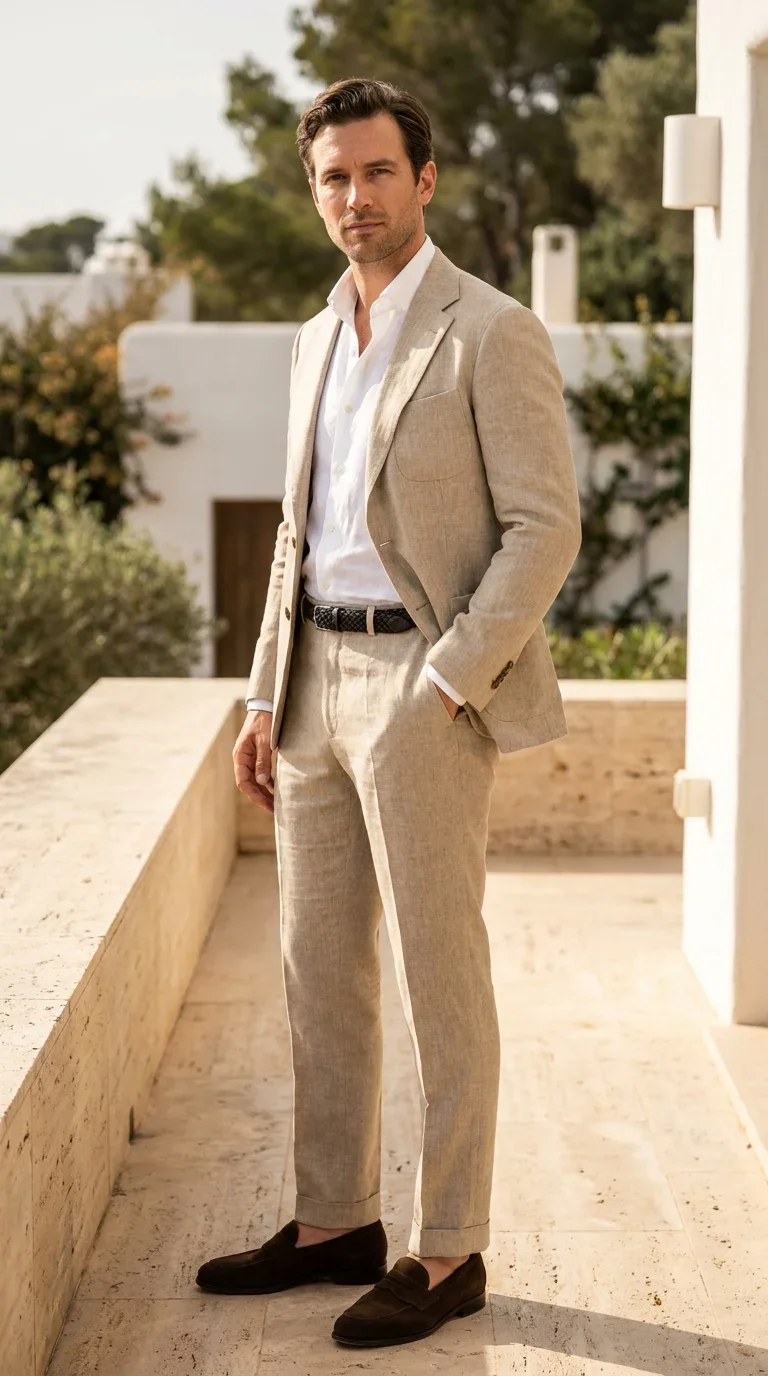
Custom Linen Suit: The Fabric That's Supposed to Wrinkle
Linen fiber comes from the stalk of the flax plant, one of the oldest textile fibers in human history, and it's woven, not spun into a tight, elastic yarn the way wool is. That structural difference is exactly why linen creases so readily, and exactly why fighting that quality misses what makes linen worth wearing in the first place.
A linen suit that looks slightly softened and creased by the end of a warm afternoon isn't showing wear, it's doing its job. The fiber's open weave delivers exceptional breathability that no wool, including fresco, can fully match, at the cost of holding a crisp line the way a structured fabric does.
At H.M. Cole, a linen commission starts with setting that expectation honestly, so the finished suit is exactly what you wanted rather than a surprise the first time you sit down in it.
- Step 1: What Makes Linen Different, Flax Fiber and the Wrinkle Question
- Step 2: Understanding Linen Blends
- Step 3: Choosing Linen Weight and Weave
- Step 4: Styling a Linen Suit for Destination and Summer Weddings
- Step 5: How H.M. Cole Creates Custom Linen Suits
- Frequently Asked Questions
- Book a Private Linen Consultation
If you want a suit that stays sharp through a 90-degree afternoon without a single crease, choose fresco wool instead. Linen is for something different: comfort, texture, and honest, relaxed character.
Step 1: What Makes Linen Different, Flax Fiber and the Wrinkle Question
Flax fiber comes from the stalk of the flax plant rather than an animal coat, harvested and processed through a labor-intensive process that hasn't fundamentally changed in centuries. The fibers themselves are stiffer and less elastic than wool or cotton, which is what gives linen cloth its distinctive dry, textured hand and its tendency to hold a crease once formed.
That same stiffness is also why linen breathes so exceptionally well. The fiber doesn't cling to the body the way a softer, more elastic fabric does, and it wicks moisture efficiently, making it one of the coolest natural fibers available for genuinely hot climates.
Historically, Ireland and Belgium have been especially prized sources of fine linen, owing to flax-growing conditions and generations of specialized processing expertise in both regions.
Step 2: Understanding Linen Blends
Pure linen delivers maximum breathability and the most pronounced wrinkling. Blending linen with another fiber shifts that balance, trading some breathability for added structure and reduced creasing.
Pure Linen
Maximum breathability and texture, with the most noticeable wrinkling and the most relaxed, informal character.
Linen-Cotton Blend
Softer hand and somewhat improved wrinkle resistance, while retaining much of linen's breathability and texture.
Linen-Wool Blend
Added structure and shape retention, a practical middle ground between linen's coolness and wool's tailored drape.
Linen-Silk Blend
A subtle sheen and smoother drape layered over linen's natural texture, well suited to more formal warm-weather occasions.
Step 3: Choosing Linen Weight and Weave
Linen weight is typically measured the same way as wool, in ounces or grams per yard, and the right weight depends on how the suit will actually be worn.
Lightweight Linen
The most breathable option, best suited to genuinely hot, humid climates and casual daytime wear. This weight wrinkles most readily and holds the least structure.
Mid-Weight Linen
A more versatile choice that holds a tailored shape somewhat better while still offering strong breathability, a reasonable default for a first linen suit.
Textured and Slubbed Weaves
Some linen cloth is intentionally woven with visible slubs, small irregularities in the yarn, adding character and texture. This is a style choice rather than a quality issue, and it's part of what gives linen its distinctive, handmade appearance.
Step 4: Styling a Linen Suit for Destination and Summer Weddings
Linen has become the default choice for destination and outdoor summer weddings, and for good reason: it's genuinely comfortable in heat that would make a heavier wool suit unbearable, and its relaxed character suits an outdoor, less formal setting better than a crisp business cloth.
Lighter colors, such as tan, sand, and soft blue, are especially popular for daytime outdoor ceremonies, while a mid-weight linen-wool blend offers a slightly more polished option for an evening reception. Unstructured or half-canvas construction pairs naturally with linen's relaxed character, avoiding the stiffness of a heavily padded, fully structured jacket.
A linen suit that looks a little relaxed by evening isn't a wardrobe malfunction, it's exactly what the fabric was chosen to do.
Step 5: How H.M. Cole Creates Custom Linen Suits
Every H.M. Cole linen commission starts with a conversation about use: a destination wedding, a warm-climate wardrobe piece, or a more structured linen-wool blend for elevated summer business wear.
Your clothier walks you through relevant linen weights and blends in person, since hand and texture are easier to judge by feel, followed by full measurements and a posture assessment suited to linen's naturally relaxed silhouette.
- Linen weight and blend selection
- Lapel shape and width
- Shoulder structure, typically soft and unstructured
- Lining selection, often minimal or unlined for maximum breathability
- Trouser rise and fit
- Color, particularly for outdoor and destination events
- Intended use and event timeline
Most H.M. Cole bespoke suits begin at $5,000, with final pricing depending on the specific linen weight and blend selected.
Clients should generally allow approximately 10 to 14 weeks for a bespoke commission, and destination wedding clients should book well ahead of travel to allow time for fittings.
Frequently Asked Questions
Is It Normal for a Linen Suit to Wrinkle?
Yes, and it's an expected characteristic of the fiber rather than a flaw. Linen's stiffer fiber structure is what gives it exceptional breathability, and creasing is simply part of how the fabric behaves through a day of wear.
What's the Difference Between Linen and Fresco Wool for Summer?
Fresco wool holds a sharper, more structured line and resists wrinkling far better than linen, while linen offers slightly better raw breathability and a more relaxed, textured character. Fresco suits daily business wear in heat; linen suits more casual or destination occasions.
What Color Linen Suit Works Best for an Outdoor Wedding?
Lighter tones such as tan, sand, and soft blue are especially popular for daytime outdoor ceremonies, while a mid-weight linen-wool blend in a slightly deeper tone works well for evening receptions.
How Much Does a Custom Linen Suit Cost?
Most H.M. Cole bespoke suits begin at $5,000, with final pricing depending on the linen weight, blend, and construction chosen.
Book a Private Linen Consultation
Linen isn't trying to be the crispest suit in the room. It's trying to be the coolest, most honest one, and that's exactly why it's earned its place in warm-weather wardrobes for centuries.
Visit H.M. Cole for a private fitting and feel linen weights and blends in person before choosing the right one for your next warm-weather commission.
Design Your Custom Linen Suit
Explore linen weights and blends for a custom suit built for warm weather, destination events, and relaxed, honest elegance.
Schedule a Fitting