

Mohair is the fiber with shine built into the strand itself, no finish, no treatment, just a natural luster that regular wool can't replicate. H.M. Cole builds custom mohair and wool-mohair suits for clients who want a jacket that photographs beautifully under evening light and shrugs off wrinkles after a full day on your feet.
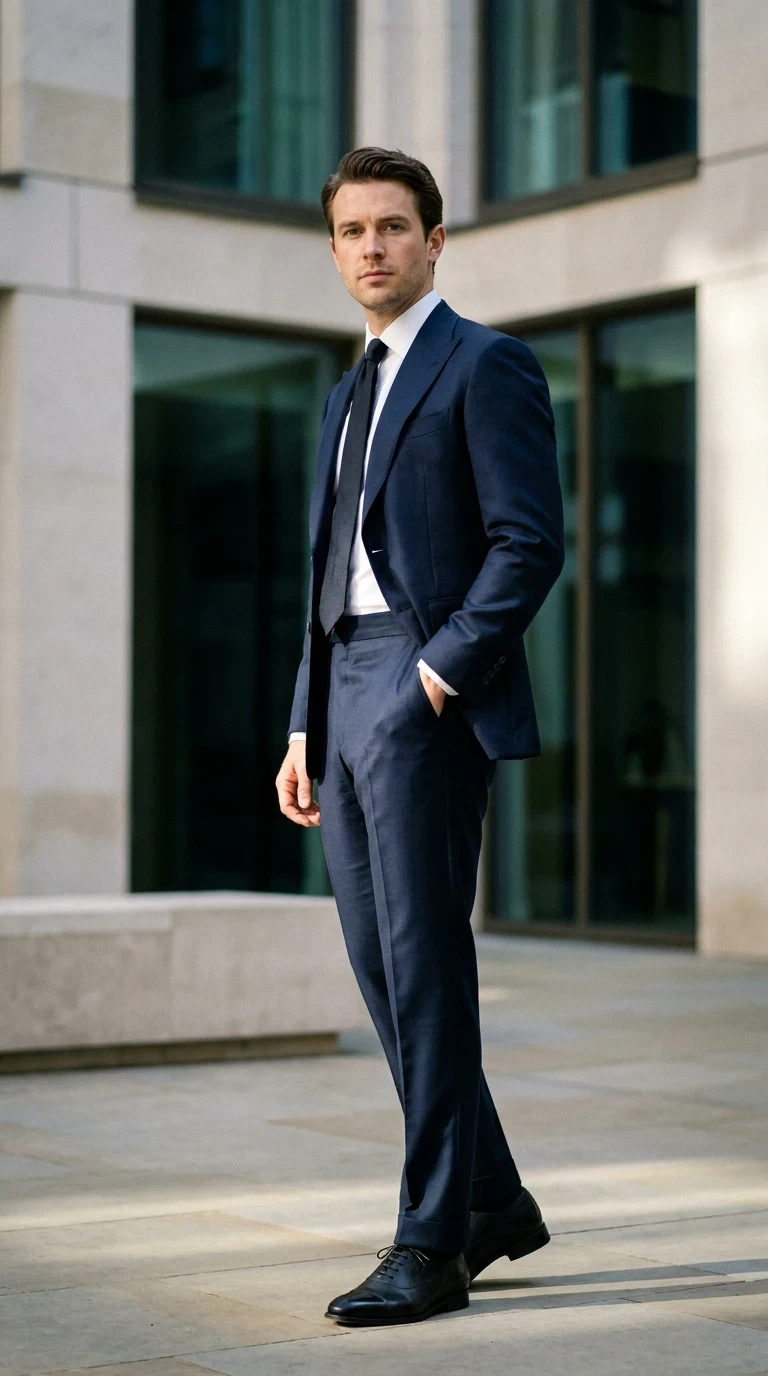
Custom Mohair Suit: The Fiber Insiders Choose for Shine and Durability
Mohair comes from the Angora goat, not the sheep most suiting wool comes from, and that different source is exactly why it behaves so differently on the body. The fiber's smooth, reflective surface catches light in a way flat wool simply doesn't, while its natural resilience makes it one of the most wrinkle- and wear-resistant fibers used in tailoring today.
That combination, visible shine plus real-world durability, is why mohair has quietly been the fabric of choice for sharply dressed men in warm climates and formal settings for generations, even when most clients have never heard the name.
At H.M. Cole, a mohair commission starts with a straightforward question: business suit, tuxedo, or warm-weather wardrobe piece, since each points toward a different mohair blend and weight.
- Step 1: What Makes Mohair Different, The Fiber With Natural Shine
- Step 2: Mohair vs. Wool, Sheen, Durability, and Breathability
- Step 3: Understanding Mohair Blends
- Step 4: Why Mohair Is the Tuxedo Insider's Secret
- Step 5: How H.M. Cole Creates Custom Mohair Suits
- Frequently Asked Questions
- Book a Private Mohair Consultation
Most fabrics need a finish to shine. Mohair is born with it, and it doesn't wash out, wear off, or fade the way a surface treatment eventually does.
Step 1: What Makes Mohair Different, The Fiber With Natural Shine
Mohair fiber comes from the Angora goat, primarily raised in South Africa, Texas, and Lesotho, and has a smooth, scale-free surface structure entirely different from sheep's wool. That smoothness is what reflects light so distinctly, giving mohair cloth a natural luster rather than the matte finish typical of standard wool suiting.
Mohair is also unusually strong and elastic for a natural fiber, which translates directly into wrinkle resistance and durability. A mohair-blended suit that's been sat in all day and traveled in tends to look noticeably fresher at the end of the day than a comparable pure wool garment.
Step 2: Mohair vs. Wool, Sheen, Durability, and Breathability
Standard worsted wool offers a clean, matte finish and remains the versatile default for most business suiting. Mohair trades some of that understated matte quality for visible sheen, added durability, and notably better wrinkle resistance, at the cost of being slightly less common and requiring a specialist mill or blend.
Mohair also breathes exceptionally well and has a naturally cooling hand against the skin, making mohair and wool-mohair blends a strong warm-weather option, closer in performance to fresco wool than to a standard heavyweight suiting cloth.
Standard Wool
Matte finish, broadly versatile, the safe default for everyday business suiting.
Mohair-Blended Wool
Visible sheen, superior wrinkle resistance, and excellent breathability, ideal for events, evening wear, and warm climates.
Step 3: Understanding Mohair Blends
Pure mohair is rarely used for full suiting on its own. Most mohair suiting cloth is blended with wool or silk, and the blend ratio determines how much sheen and durability the finished suit carries.
Wool-Mohair Blend
A modest percentage of mohair added to worsted wool, adding subtle sheen and wrinkle resistance to a durable, everyday cloth.
Tropical Mohair Blend
A lighter-weight version built specifically for hot climates, combining mohair's breathability with a crisp, cool hand.
Mohair-Silk Blend
Increased luster and a smoother drape, frequently chosen for tuxedos and formal evening wear.
High-Mohair Content
A higher percentage of mohair for maximum sheen and durability, reserved for statement pieces rather than daily rotation.
Step 4: Why Mohair Is the Tuxedo Insider's Secret
Formalwear specialists have quietly favored mohair-silk blends for tuxedos for decades, and the reason is simple: under evening lighting, a mohair-blended dinner jacket reads noticeably richer and more dimensional in photographs than a flat matte wool ever will.
That same sheen also holds up better across a long night of standing, dancing, and sitting than most tuxedo fabric, since mohair's natural resilience resists the crushed, tired look a lesser cloth develops by the end of the evening.
Clients building formalwear specifically for weddings, galas, or recurring black-tie seasons are exactly who this fabric was built for.
If your tuxedo photos are the ones you'll look back on for years, the fabric holding its shape and shine through the whole night is worth choosing deliberately.
Step 5: How H.M. Cole Creates Custom Mohair Suits
Every H.M. Cole mohair commission starts with a conversation about use: everyday business wear with subtle sheen, a warm-climate wardrobe piece, or formal and tuxedo commissions built for maximum shine and durability.
Your clothier walks you through relevant mohair blends in person, since sheen and hand are best judged under real light, followed by full measurements and a posture assessment.
- Mohair blend and percentage selection
- Lapel shape and width
- Shoulder structure and canvas construction
- Lining selection
- Trouser rise and fit
- Formal detailing, if commissioning a tuxedo
- Intended use and event timeline
Most H.M. Cole bespoke suits begin at $5,000, with final pricing depending on the specific mohair blend and construction selected.
Clients should generally allow approximately 10 to 14 weeks for a bespoke commission, and formalwear clients booking for a specific event should reserve their fitting well ahead of the date.
Frequently Asked Questions
Is Mohair Wool?
No. Mohair comes from the Angora goat, not sheep. It's often blended with sheep's wool for suiting, but it's a distinct fiber with a smoother, more reflective surface structure.
Is Mohair Good for Hot Weather?
Yes. Mohair breathes exceptionally well and has a naturally cooling hand, making mohair and wool-mohair blends a strong choice for warm climates and summer formalwear.
Why Do Tuxedos Use Mohair?
Mohair-silk blends are favored for tuxedos because the fiber's natural sheen photographs beautifully under evening light and resists wrinkling and crushing better than standard wool across a long night of wear.
How Much Does a Custom Mohair Suit Cost?
Most H.M. Cole bespoke suits begin at $5,000, with final pricing depending on the mohair blend, percentage, and construction chosen.
Book a Private Mohair Consultation
Fabric with built-in shine and real-world resilience is rare enough that most men never get properly introduced to it. This is your introduction.
Visit H.M. Cole for a private fitting and feel mohair's sheen and hand in person before choosing the blend that fits your next suit or tuxedo.
Design Your Custom Mohair Suit
Explore mohair blends built for shine, durability, and warm-weather comfort, tailored around your exact measurements.
Schedule a Fitting