
The best suit material for most men is worsted wool. This guide explains why, then covers every other suiting fabric worth knowing - fresco, linen, cashmere, mohair, flannel, vicuña, and more - so you can choose the right cloth for your climate, schedule, and style.
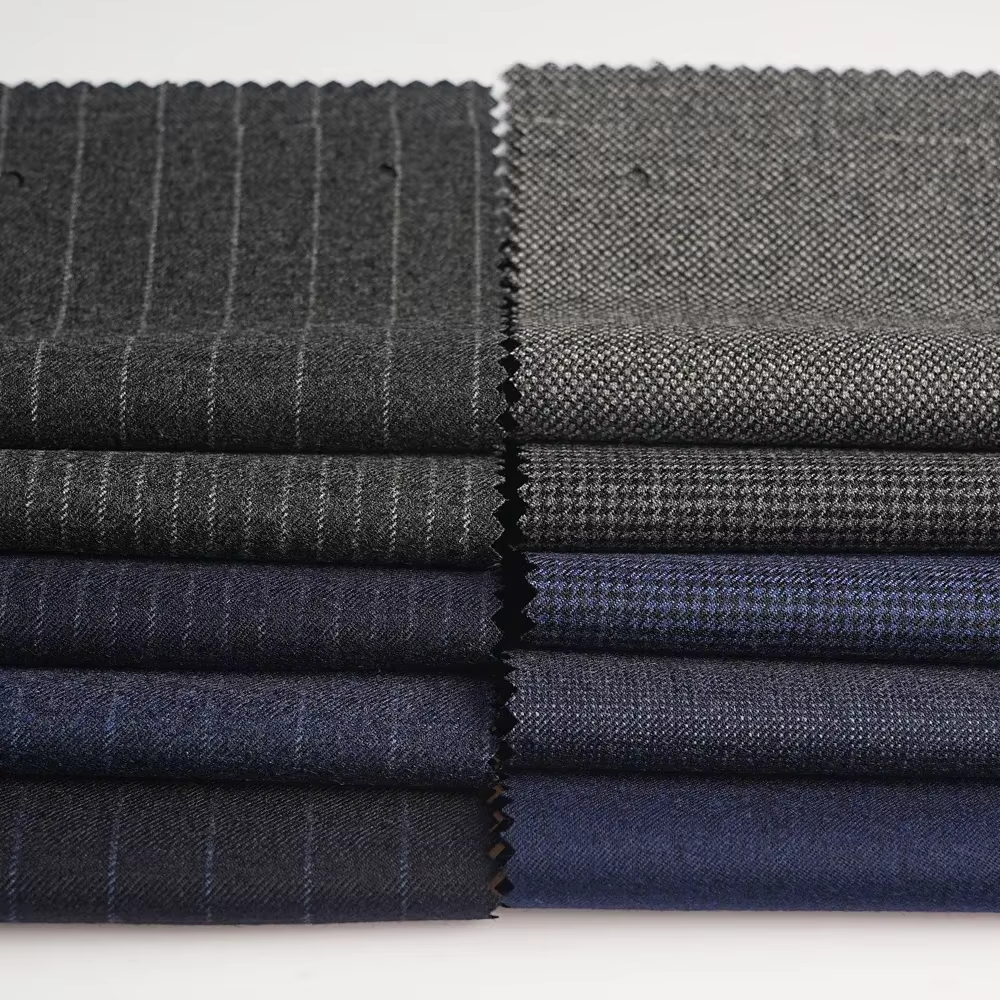
The Best Suit Material: A Guide to Suit Fabrics
The best suit material is worsted wool in the Super 110s to 120s range. It breathes, regulates temperature, drapes cleanly, and recovers from creasing better than any other fiber. The best fabrics for a custom suit depend on season and occasion:
- Best all-around and year-round: Worsted wool, Super 110s-120s, mid-weight, in navy or charcoal.
- Best for hot weather: Fresco wool, linen, or seersucker.
- Best for cold weather: Flannel, tweed, or a cashmere-wool blend.
- Best for travel and heavy wear: High-twist performance wool.
- Best for evening and black tie: Mohair, silk-wool blends, or velvet.
- The ultimate luxury: Vicuña, the rarest suit material on earth.
The fabric is the foundation of every great suit. Cut gets the compliments. Color gets noticed across the room. But the cloth determines how your suit feels at hour one - and how it still looks at hour ten. That is why fabric selection is the first conversation in our made-to-measure suit process. Get the fabric right, and everything else follows. Get it wrong, and no amount of skilled tailoring will save you.
- Wool
- The Best Wool Mills
- Fresco
- Hopsack
- Sharkskin
- Performance Wool
- Linen
- Seersucker
- Cotton
- Cashmere-Wool Blends
- Alpaca and Camel Hair
- Silk and Silk Blends
- Mohair
- Velvet
- Tweed
- Flannel
- Vicuña
- Suit Fabric Comparison Chart
- How to Choose Fabric for a Custom Suit
- Suit Fabric Care
- The H.M. Cole Difference
- FAQs
Wool: The Non-Negotiable Starting Point
Wool is the best suit material for almost every man and almost every occasion. If you own only one suit, it should be wool. Wool is the most intelligent suiting fabric ever developed - not by designers, but by nature. It regulates temperature, breathes, drapes with a weight and fluidity no synthetic can replicate, and critically, it recovers. Sit in a wool suit all day, stand up, and watch the creases fall out within minutes. That is why a well-made wool suit for men remains the foundation of every serious wardrobe.
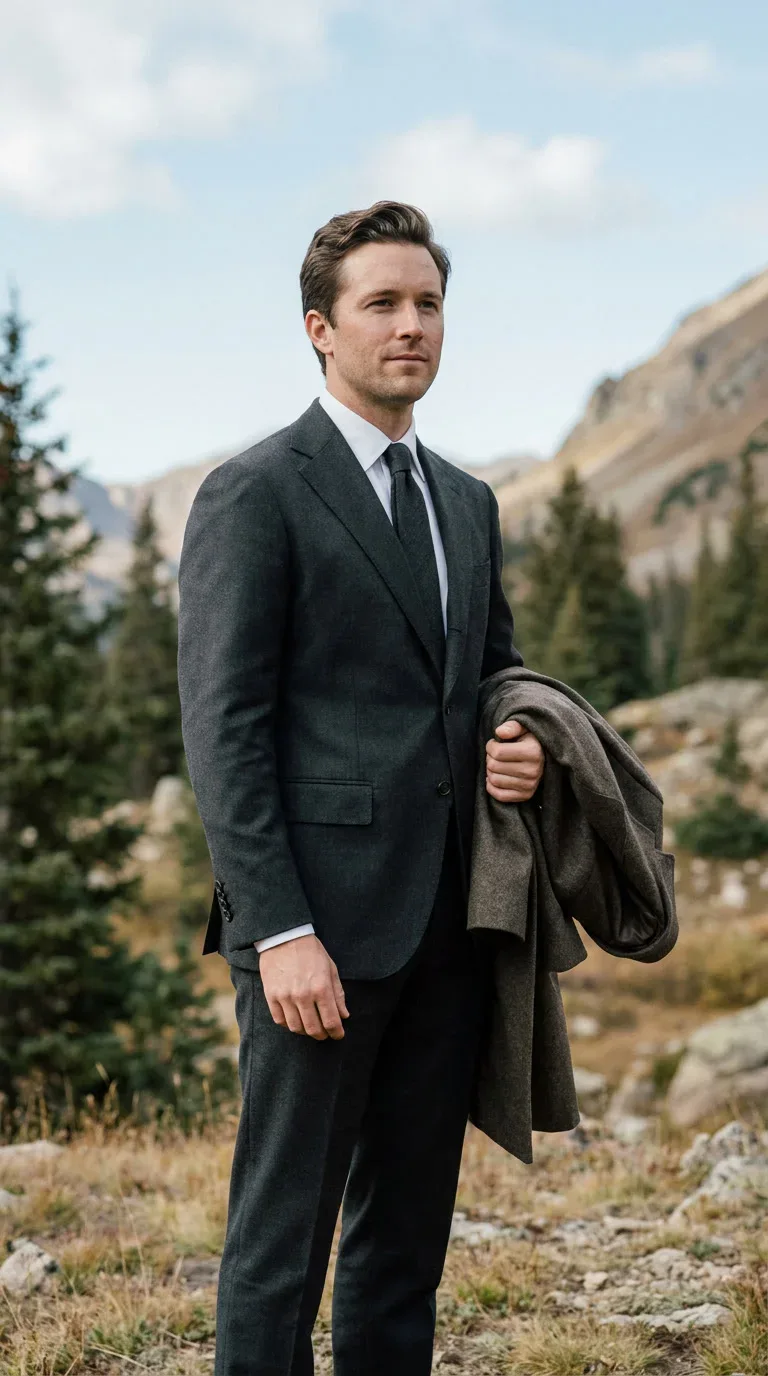
Most of the suits we make start here. A custom wool suit in navy or charcoal is the most useful garment a man can own.
Understanding Super Numbers in Wool
A Super number is a fineness grade for wool, set by the International Wool Textile Organisation. It reflects the maximum average diameter of the fiber in microns: the finer the fiber, the higher the Super number and the softer the cloth.
- Super 100s (about 18.75 microns): The workhorse. Durable, refined, appropriate for everything from a business meeting to a wedding. The right choice for suits you will wear regularly.
- Super 110s-120s (about 18.25-17.75 microns): Noticeably softer and lighter, with a subtle sheen that reads as elevated without being flashy. The sweet spot for most clients.
- Super 130s-150s (about 17.25-16.25 microns): True luxury territory. Extraordinarily soft against the skin, with a drape that feels almost liquid. Super 150s wool in particular is best reserved for special occasion suits rather than daily wear.
- Super 160s and above (about 15.75 microns and finer): Exceptional softness and sheen, but fragile. These fabrics reward careful handling and infrequent wear. They are statements, not workhorses.
Super 120s vs. Super 150s: Which Should You Choose?
Choose Super 120s for a suit you will wear every week, and Super 150s for a suit you will wear a few times a season. Super 120s wool (about 17.75 microns) is soft, smooth, and hard-wearing; Super 150s (about 16.25 microns) is noticeably silkier and drapes more fluidly, but it creases more easily and wears faster at the elbows and seat.
- Feel: Super 120s is smooth and soft; Super 150s is silky, almost liquid.
- Durability: Super 120s handles weekly wear for years; Super 150s needs rest days between wears.
- Wrinkles: Super 120s recovers quickly; Super 150s holds creases longer, especially in lighter weights.
- Best for: Super 120s for business and travel; Super 150s for weddings, evenings, and special occasions.
Cloth Weight: The Number That Matters as Much as Super
Cloth weight is measured in ounces per yard or grams per meter, and it decides which season a suit belongs to more than the Super number does.
- Lightweight (7-9 oz, about 220-280 g): Summer suits and warm climates.
- Mid-weight (9-11 oz, about 280-340 g): The true year-round range for most cities.
- Heavyweight (12 oz and up, about 370 g+): Winter suits, flannels, and tweeds.
What Is the Best Suit Fabric for Year-Round Wear?
The best suit fabric for year-round wear is a mid-weight worsted wool of about 9-11 oz (280-340 g), in Super 110s to 130s. It is light enough for warm days and air-conditioned offices, and warm enough for spring, fall, and heated winter interiors. In hotter cities, choose the lighter end of that range or a fresco; in colder ones, go toward 11 oz.
If you are building a serious wardrobe, start with a mid-weight Super 110s or 120s wool in navy or charcoal. It is the single best investment you can make in your appearance.
The Best Wool Mills
The finest wool suiting fabrics come from a handful of mills that have been perfecting their craft for generations. Italian suit fabric is prized for its soft hand and fluid drape, and most of the Italian mills below are based in or near Biella, the wool district of northern Italy; British cloth tends to be firmer and more hard-wearing. When you choose a made-to-measure suit at H.M. Cole, you are choosing from cloth woven by the world's most respected producers:
- Loro Piana, Italy: The benchmark for fine wool and cashmere. Loro Piana cloth is synonymous with quiet, unimpeachable luxury.
- Vitale Barberis Canonico, Italy: One of the world's oldest wool mills, founded in 1663. Our Vitale Barberis Canonico fabric range covers Super 100s through Super 150s with remarkable consistency.
- Ermenegildo Zegna, Italy: A mill-to-tailoring house known for fine merino. Zegna fabric is prized for its smooth hand and reliable drape.
- Reda, Italy: A merino specialist since 1865. Reda wool is a strong choice for everyday suits that still feel refined.
- Holland & Sherry, Scotland/England: A cornerstone of British tailoring, offering an extraordinary range of weights, weaves, and patterns.
- Scabal, Belgium: Known for innovation and exclusivity, including cloths woven with gold thread and rare fiber blends. See our Scabal fabric collection.
- Dormeuil, France: Purveyors of some of the rarest suiting fabrics in existence, including vicuña and the legendary Vanquish II. Explore our Dormeuil fabric options.
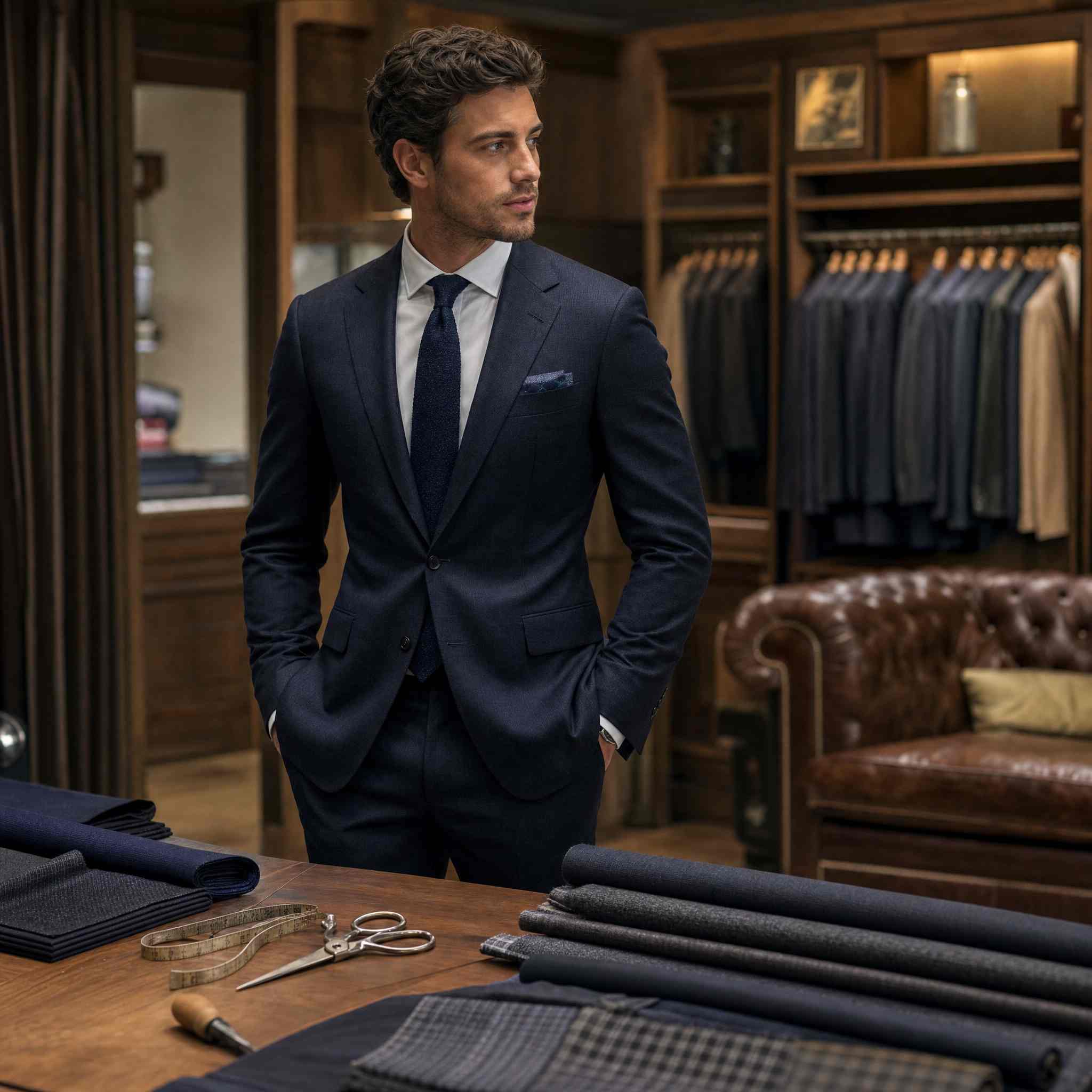
Fresco: The Most Breathable Wool Fabric
Fresco is an open-weave worsted wool made from tightly twisted yarns, and it is the most breathable wool you can wear. If you dress for a hot summer - from Las Vegas to San Antonio - fresco is the fabric that changes everything. Those high-twist yarns give it a slightly rough, crisp hand, and the open weave lets air move freely through the cloth.
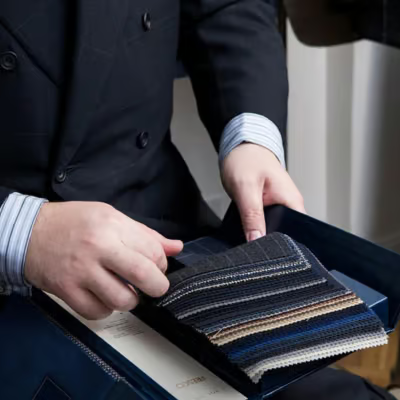
Neapolitan tailors have relied on fresco for decades because it performs in heat without sacrificing the drape and recovery of fine wool. A fresco wool suit in mid-gray or navy will carry you through a July board meeting with the same composure it brings to an October dinner. It is one of the best summer suit materials there is - and one that is criminally underused in American wardrobes.
Hopsack: The Casual-Smart Essential
Hopsack is an open, basket-weave wool with a softer, more relaxed hand than fresco. The weave creates a subtle texture that reads as smart-casual - elevated enough for business, relaxed enough for a weekend event.
Navy hopsack, in particular, is one of the most versatile fabrics in menswear. It bridges the gap between a formal suit and a sport coat with an ease that few other fabrics manage. If you want one suit that works across the office, weddings, and weekends, a hopsack suit or blazer deserves serious consideration.
Sharkskin: The Business Fabric With a Subtle Sheen
Sharkskin is a worsted wool woven with alternating light and dark yarns in a tight twill, which produces a fine, stepped pattern and a soft two-tone sheen. Despite the name, it has nothing to do with sharks. Up close, the cloth looks almost textured. From across the room, it reads as a smooth, solid color that shifts slightly as you move through the light.
Sharkskin had its moment in the late 1950s and 1960s, when sharp, slim business suits defined the well-dressed American man - and it never really left. Most sharkskin suits are cut in charcoal, mid-gray, silver-gray, or navy, and all four work beautifully in the boardroom, at a wedding, or at an evening event. Because it is a tightly woven worsted, sharkskin is also durable and holds a crisp line through a long day.
Performance Wool: Built for Travel and Long Days
Performance wool is a high-twist worsted built to resist wrinkles and recover its shape quickly, which makes it the best suit material for travel. If you live out of a carry-on, sit through back-to-back meetings, or wear the same suit from a morning flight to a late dinner, you need cloth built for endurance.
Performance suits are typically cut from wools woven with tightly twisted yarns that give the fabric natural spring. The result breathes like fine wool, shrugs off a suitcase, and bounces back after hours of sitting. Some performance cloths also add a small amount of stretch for easier movement. A performance suit will not have the liquid drape of a Super 150s, and it is not meant to. It is meant to look sharp on day three of a business trip.
Linen: The Summer Essential You Should Stop Resisting
Linen is woven from flax fibers, and it is the coolest natural suit material you can wear. There is a certain kind of man who refuses to wear linen suits because they wrinkle. That man is spending his summers overdressed, overheated, and missing the point entirely.
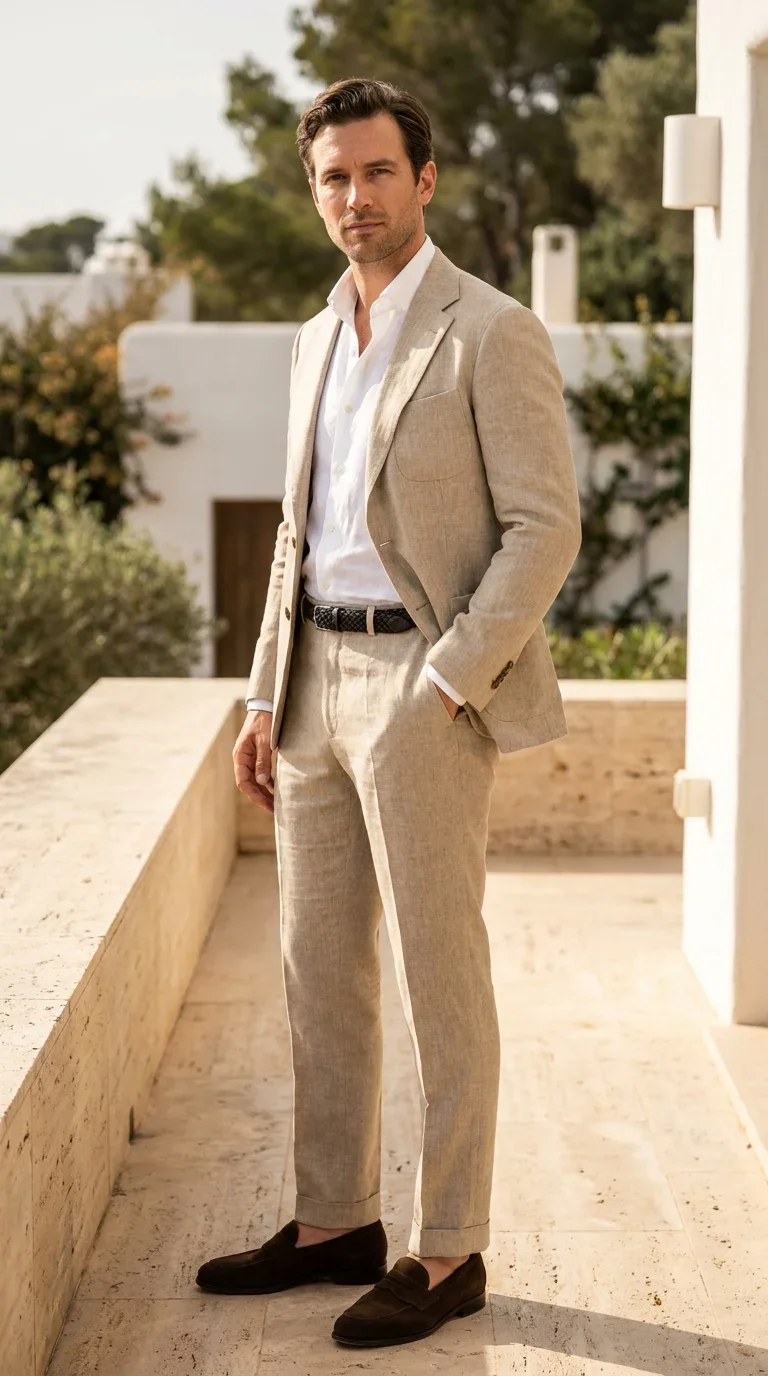
Linen is extraordinarily breathable, moisture-wicking, and lightweight. At an outdoor wedding, a garden party, or a summer reception, linen does not just look appropriate. It feels like the only sensible choice.
Yes, linen wrinkles. Here is the reframe: on linen, wrinkles are texture. They are evidence that you are wearing a natural fabric - not a pressed synthetic shell. The key is fit. A linen suit that fits well wears its wrinkles with character. One that does not fit just looks rumpled. That is why a custom linen suit is worth more than any off-the-rack version. Choose stone, cream, light blue, or sage, and pair it with a pale dress shirt and loafers or suede derbies.
Book a Fabric Consultation
Feel the difference between wool, linen, cashmere, silk, and seasonal fabrics before choosing your made-to-measure suit.
Book a ConsultationSeersucker: The American Summer Classic
Seersucker is a lightweight cotton woven with alternating slack and taut threads, which creates its signature puckered texture. That pucker keeps the fabric off the skin, letting air circulate and making it one of the coolest suiting options available.
Traditionally worn in pale blue and white stripes, seersucker has expanded into solids and subtle patterns that work well beyond its Southern roots. At a summer wedding, a garden party, or a warm-weather outdoor event, a well-fitted seersucker suit is one of the most confident style choices a man can make.
The key word, as always, is fit. The seersucker suit rewards a clean, close silhouette. Worn loose, it reads as costume. Worn well, it is impeccable.
Cotton: The Underrated Everyday Option
Cotton is a breathable, easy-care suit material that sits between linen's casual ease and wool's formal authority. It holds color beautifully and is significantly easier to care for than wool or linen.

It is the right choice for business casual environments, warm-weather offices, or occasions where you want to look sharp without the weight of a full wool suit. Navy, olive, and mid-gray all photograph well and wear comfortably through long days. A custom cotton suit will not have the drape of fine wool, but for a suit that works hard without demanding attention, it is a quietly excellent answer.
Cashmere and Wool Blends: The Luxury You Will Feel Immediately
A cashmere-wool blend combines the softness and warmth of cashmere with the structure and recovery of fine wool. If you have never worn one, you owe it to yourself to feel it. The moment you put it on, something is different - softer against the skin, lighter on the shoulders, warmer without the weight.
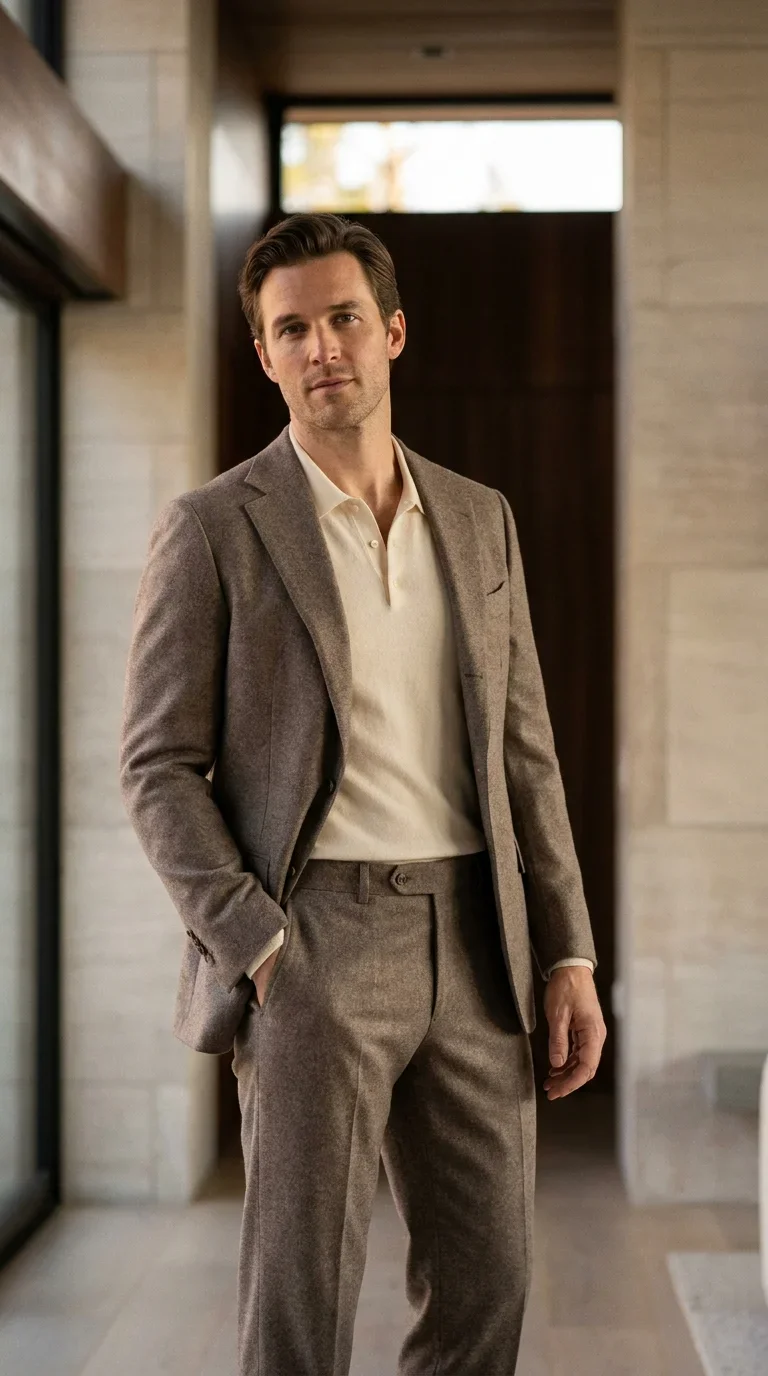
Cashmere blends are warmer than standard wool, making them ideal for autumn and winter suiting. They carry a subtle, natural sheen that reads as quiet luxury. A charcoal or deep navy cashmere suit is a boardroom statement, a special occasion piece, and the best suit you have ever owned, all at once. For many clients, a Loro Piana custom suit in a cashmere-wool blend is where that experience begins.
Wool vs. Cashmere Suit: Which Is Better?
A wool suit is better for everyday wear, and a cashmere suit is better for comfort and warmth on special occasions. Wool is more durable, more resilient, and works year-round, while cashmere is softer and warmer for its weight but wears faster, can pill at friction points, and belongs to fall and winter.
That is why most cashmere suiting is a cashmere-wool blend: the wool adds structure and recovery, and the cashmere adds softness and warmth. For most men, a blend is the best way to wear cashmere in a suit.
Alpaca and Camel Hair: The Warm Alternatives
Alpaca
Alpaca fiber comes from alpacas raised in the Andes, and it is warmer than sheep's wool for its weight because many of its fibers are partly hollow. It has a soft hand, a gentle natural luster, and contains no lanolin, which makes it a good option for men who react to some wools.
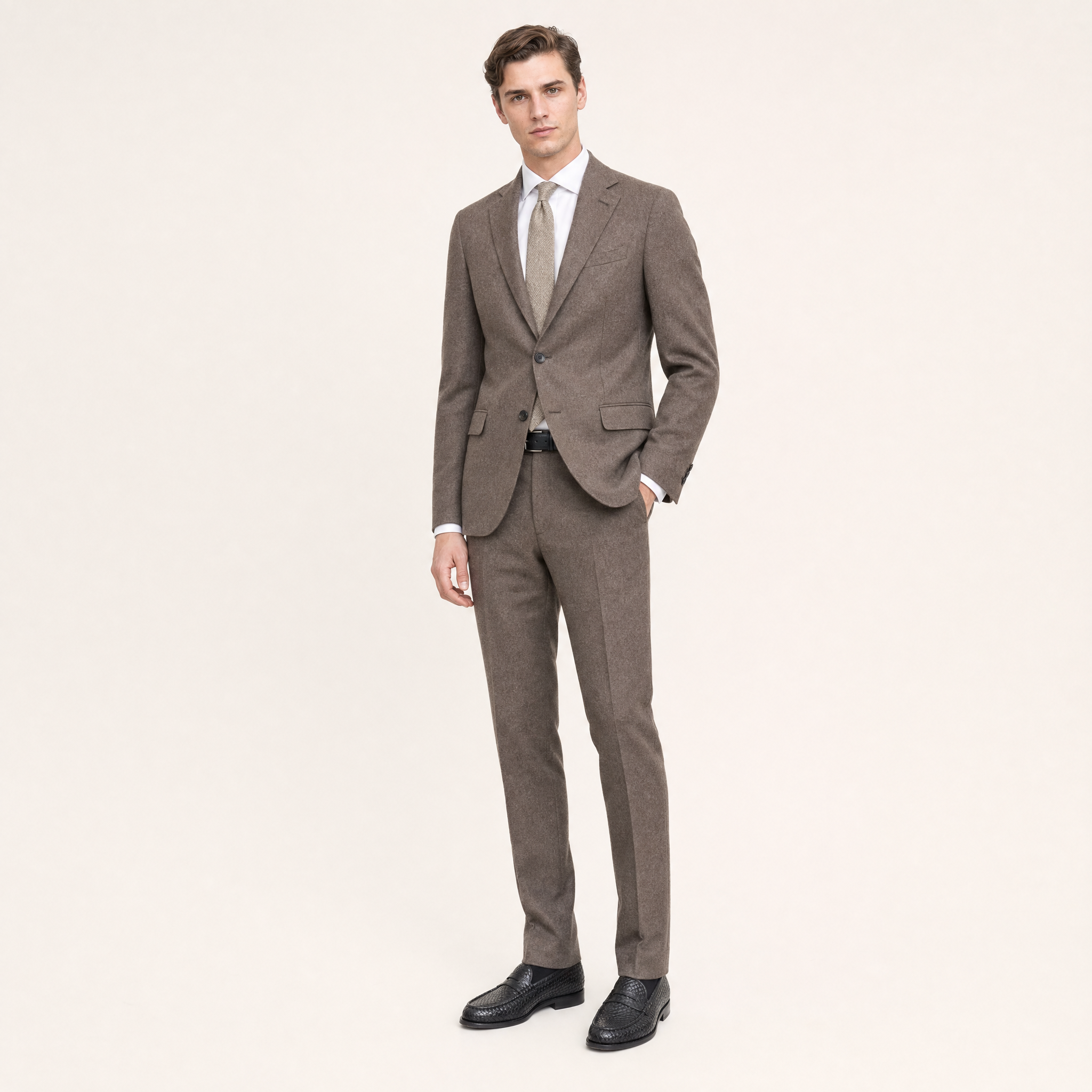
An alpaca suit is an excellent cool-weather alternative to cashmere. For a softer, more relaxed Italian take, our Ariston fabric range brings alpaca into made-to-measure suits and sport coats.
Camel Hair
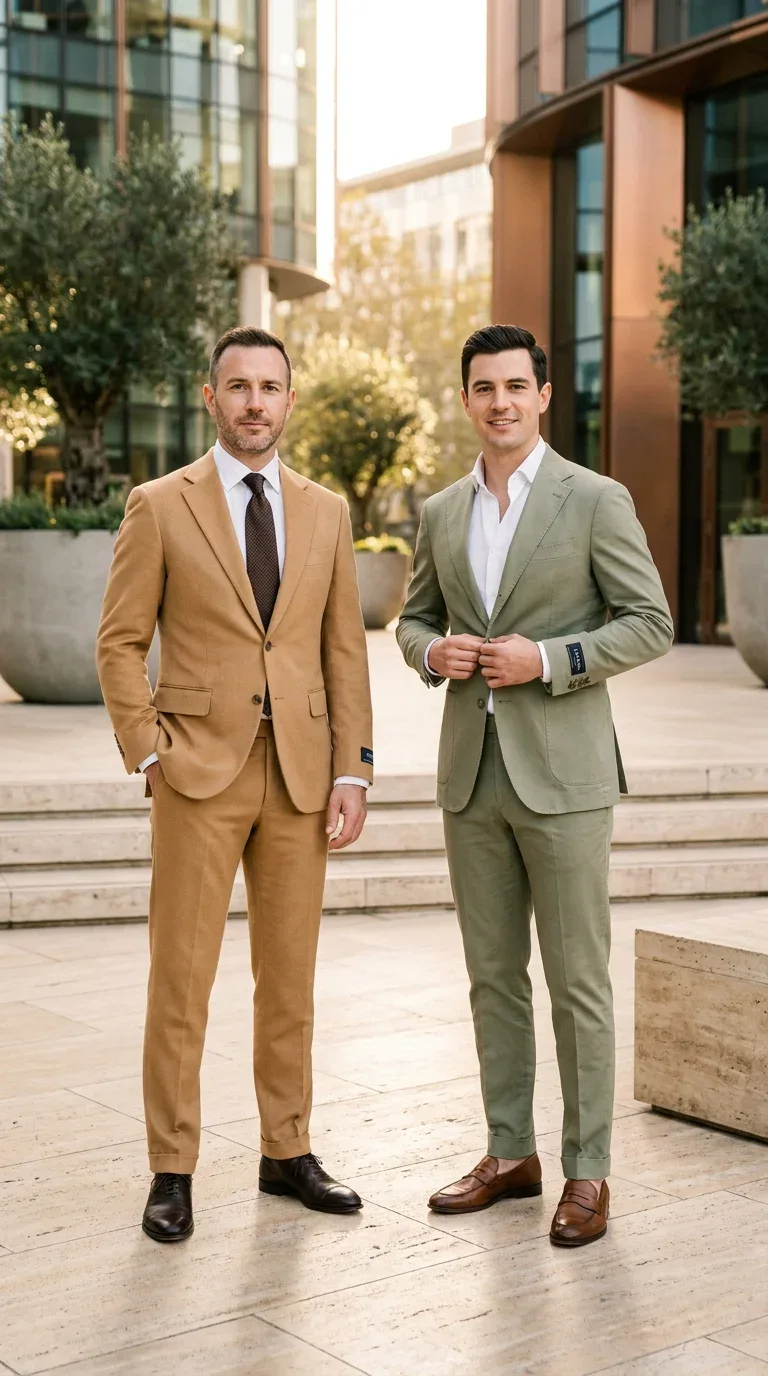
Camel hair is the soft undercoat of the Bactrian camel, known for its warmth and natural golden-tan color. It is a classic for sport coats and overcoats, and a camel hair suit is a warm, distinctive choice for cold-weather smart-casual dressing.
Silk and Silk Blends: Formality at Its Most Refined
A silk-wool blend combines the drape and recovery of wool with the luminous sheen and lightness of silk, and it is one of the most formal suit materials you can choose. Pure silk suits are rare and demanding - they do not recover from creasing the way wool does, and they are best understood as statement pieces. Silk-wool blends are another matter entirely.
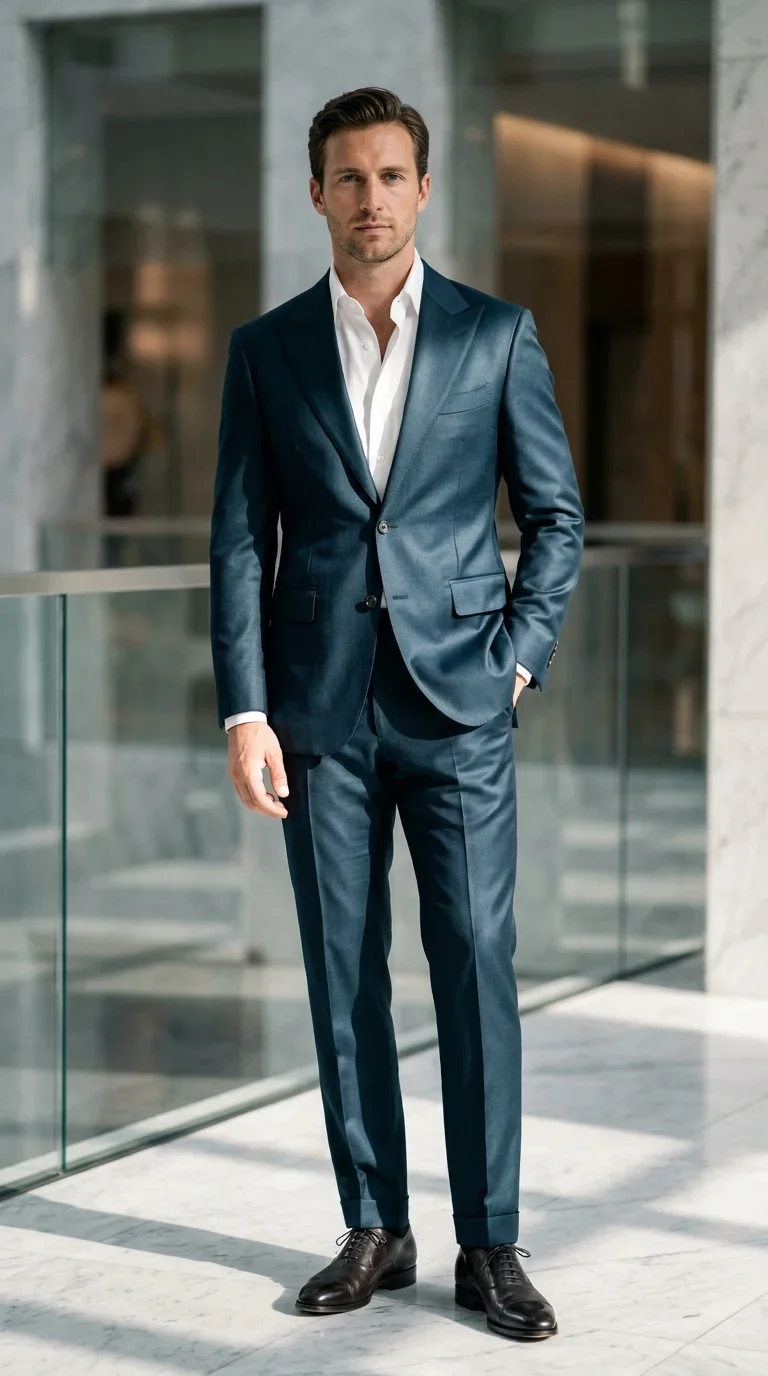
A silk blend suit reads as unmistakably formal - right for black-tie adjacent events, important evenings, and occasions where you want to be the best-dressed man in the room without wearing a tuxedo.
Dupioni silk deserves particular mention for evening wear. Its slubbed texture comes from cocoons spun by two silkworms together, producing a rich, irregular surface that catches the light. A dupioni silk dinner jacket in midnight navy or deep burgundy is one of the most striking things a man can wear to a formal evening.
Explore Our Fabrics
Choose from natural fabrics selected for comfort, seasonality, occasion, and long-term performance.
Explore Our FabricsMohair: The Fabric That Commands Attention
Mohair is woven from the fleece of Angora goats, and it has a natural high-luster sheen unlike any other suiting fabric. Under artificial light - which is where you will most often wear it - a mohair suit looks almost luminous.
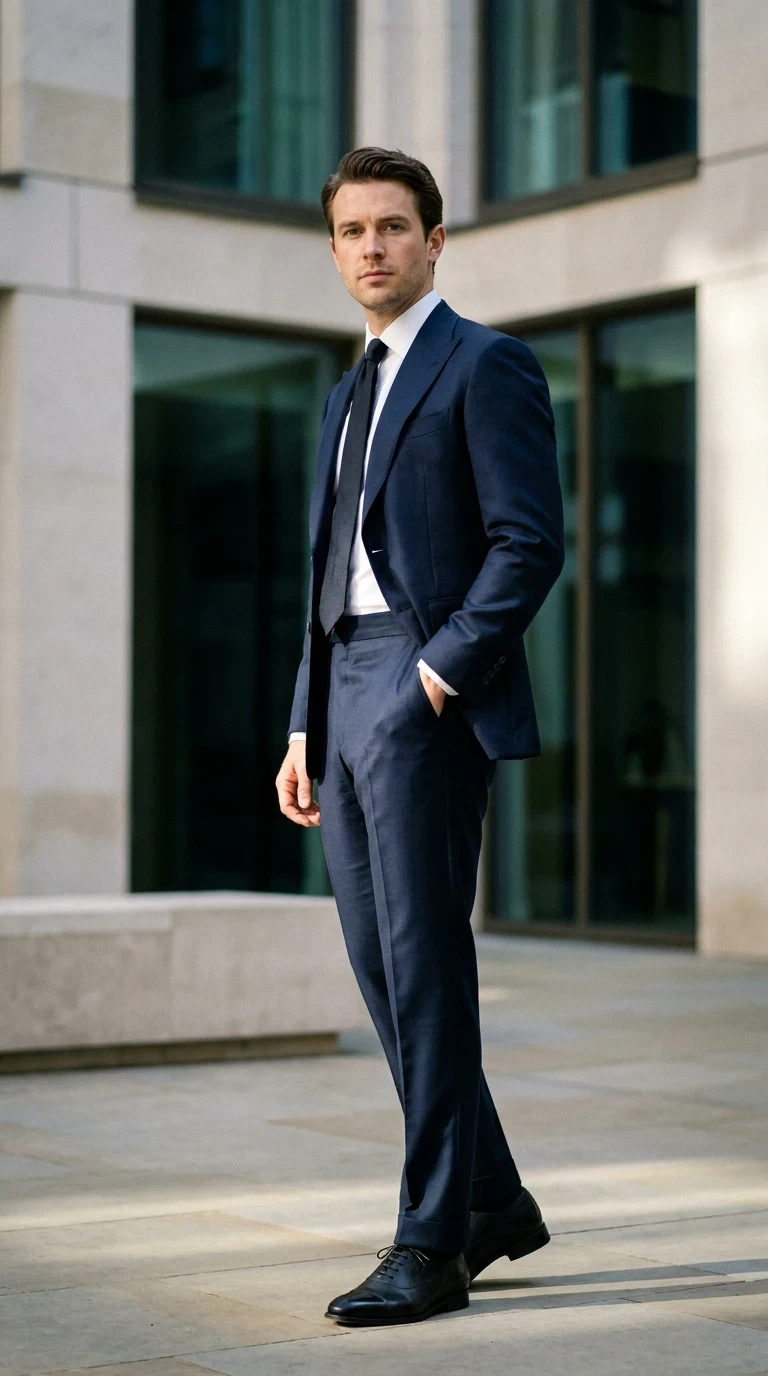
Mohair was the defining fabric of 1960s British tailoring, and it is making a well-deserved return. A mohair suit in midnight blue or charcoal, cut close, is one of the most striking things a man can wear to a wedding, a gala, or any evening event where standing out is the point. It is also surprisingly practical in summer: mohair breathes better than its weight suggests and resists creasing through long events.
Velvet: The Evening Fabric That Earns Its Place
Velvet is a pile fabric with a deep, light-catching surface, made for evening. It makes a statement the moment you walk into a room.
A velvet dinner jacket in midnight navy, forest green, deep burgundy, or classic black is the definitive alternative to a standard tuxedo jacket, with a depth of color no other material can replicate. Pair it with a white dress shirt, black dress trousers, and a black bow tie for an evening look that is both traditional and individual.
The velvet suit, as opposed to the dinner jacket, is rarer and more demanding - but in a rich jewel tone, worn to the right occasion, it is the kind of thing people remember. Velvet belongs to the cooler months, both for comfort and because its richness reads as inherently autumnal and wintry.
Tweed: The Cold-Weather Classic
Tweed is a rough-textured, heavyweight wool woven for warmth and durability. It is the fabric of country estates and weekend dressing - a tweed suit or sport coat in herringbone or houndstooth is one of the most timeless things a man can wear.
It is not a boardroom fabric. But for autumn weddings, weekend events, or any occasion with a relaxed dress code, tweed suits are unmatched in character and warmth. The best tweeds come from Scotland and Ireland, and Harris Tweed, hand-woven in the Outer Hebrides, carries a heritage no ordinary mill cloth can replicate.
Flannel: Winter Suiting at Its Most Elegant
Flannel is a brushed wool with a soft, matte surface and real warmth, which makes it the classic winter suit material. There is a reason the gray flannel suit became mid-century shorthand for the well-dressed American professional: in mid-gray or charcoal, it is understated, deeply textured, and unmistakably intentional.
Flannel rewards the man who pays attention to seasonal dressing. Worn in its proper season - roughly October through March - a well-made flannel suit is the kind of garment that makes other men ask where you had it made. If you are building out your winter suits, flannel is the place to start.
Vicuña: The Rarest and Most Expensive Suit Material on Earth
Vicuña is the most expensive suit material in the world. It comes from the vicuña, a wild camelid that lives at high altitude in the Andes - primarily Peru - and its fiber was once reserved for Incan royalty. Fabric costs can reach several thousand dollars per meter.
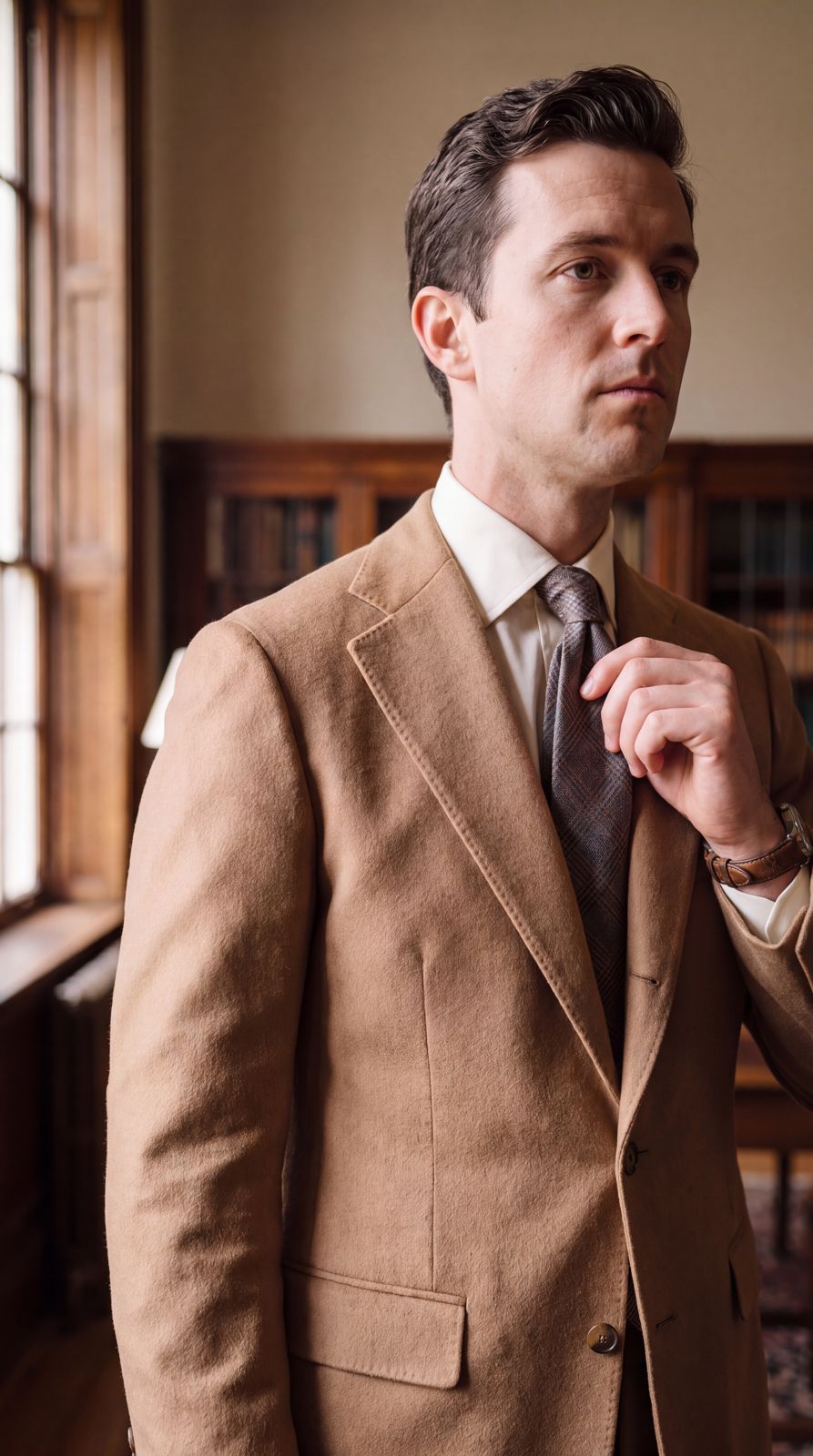
The fiber measures around 12 microns - finer than the finest cashmere - and produces a cloth of incomparable softness and warmth. Its natural warm camel-gold color is unique to the animal. Dormeuil and Loro Piana are among the few houses with access to certified vicuña fiber, and a finished vicuña suit is an investment measured in the tens of thousands of dollars. It is not a purchase. It is a commission.
Start Your Made-to-Measure Suit
Select the right fabric, fit, and finish for your lifestyle with guidance from H.M. Cole.
Start Your Made-to-Measure SuitSuit Fabric Comparison: Season, Occasion, and Formality
Use this chart to compare every major suit material at a glance, grouped by when each one works best.
| Fabric | Why choose it | Formality | Durability |
|---|---|---|---|
| Year-round | |||
| Wool, Super 100s-120s | Breathes, recovers, and lasts; the everyday workhorse | Business to formal | Excellent |
| Wool, Super 130s-150s+ | Softer hand and liquid drape for occasion suits | Smart to formal | Good |
| Sharkskin | Two-tone sheen with quiet interest | Business to formal | Very good |
| Performance wool | Resists wrinkles; built for travel | Business | Excellent |
| Warm weather | |||
| Fresco | The most breathable wool | Business to smart | Very good |
| Hopsack | Relaxed open weave for suits and blazers | Smart casual to business | Good |
| Linen | Coolest natural fiber; wrinkles as texture | Casual to smart | Moderate |
| Seersucker | Puckered weave lifts off the skin | Casual to smart | Moderate |
| Cotton | Easy care; holds color | Casual to business | Good |
| Cold weather | |||
| Flannel | Brushed, matte, and warm | Business to formal | Good |
| Tweed | Rugged texture, country character | Smart casual | Excellent |
| Cashmere-wool | Softness and warmth without weight | Business to formal | Good |
| Alpaca | Warm for its weight; no lanolin | Business to formal | Good |
| Camel hair | Natural golden warmth | Smart casual | Good |
| Vicuña | The rarest fiber on earth | Formal to black tie | Delicate |
| Evening and black tie | |||
| Mohair | High luster; crease-resistant | Smart to black tie | Good |
| Silk-wool and dupioni | Luminous sheen and rich texture | Formal to black tie | Moderate |
| Velvet | Deep pile, jewel-tone depth | Black tie | Moderate |
How to Choose Fabric for a Custom Suit
To choose fabric for a custom suit, start with three questions: where you will wear it, what climate you dress for, and how often you will reach for it. The answers decide the fiber, the cloth weight, and the Super number - because the best fabrics for a custom suit are always the ones that match how you live.
1. Where Will You Wear This Most?
A suit you wear to the office three times a week has different demands than one you wear to four weddings a year. Everyday suits need durability and recovery - Super 100s to 120s wool, well constructed. If you travel often, a high-twist performance wool earns its place too. Occasion suits can prioritize luxury and drape - a higher Super number, a cashmere blend, or a mohair.
2. What Climate Are You Dressing For?
From Boston winters to Las Vegas summers, no single fabric serves every season. The best suit fabric for hot weather depends on formality: linen, seersucker, fresco, or lightweight wool. Mid-weight wool and hopsack carry spring and fall. Flannel, tweed, alpaca, or cashmere blends handle winter. Build your wardrobe with the calendar in mind, and you will always have the right suit for the moment.
3. How Often Will You Reach for It?
A suit you wear constantly needs to be built for endurance. A suit you wear twice a year can afford to be more precious. Spend more on the suits you wear most, and reserve the extraordinary fabrics for the extraordinary occasions.
Suit Fabric Care: Protecting Your Investment
The finest suit fabric in the world is only as good as the care it receives:
- Wool, sharkskin, and performance wool: Hang on a shaped hanger after every wear so the cloth can recover. Brush with a soft-bristle clothes brush. Dry clean once or twice per season at most. Steam rather than press when possible.
- Linen and cotton: Dry clean or, in some cases, carefully hand-wash. Press with a damp cloth to restore crispness.
- Cashmere, alpaca, and camel hair: Treat as fine wool, with extra care. Store in a breathable garment bag with cedar to deter moths.
- Velvet: Store hanging, never folded. Brush gently in the direction of the pile and steam from a distance to revive crushed areas.
- Silk and silk blends: Dry clean only. Silk is sensitive to moisture and abrasion.
- Vicuña: Professional care only, always.
The Made-to-Measure Difference at H.M. Cole
When you buy off the rack, you choose from whatever fabric the manufacturer decided to use. You do not know the Super number. You cannot feel the weight. You are trusting a label.
At an H.M. Cole made-to-measure consultation, you choose from a curated library of fabrics for tailored suits - wools, linens, cottons, cashmeres, alpacas, tweeds, flannels, and beyond. Our suit fabrics are woven by leading mills in Italy, England, Scotland, Belgium, and France. You feel each fabric in your hands. You hold it up to the light. You make an informed decision about what you are putting on your body and wearing into the world.
A suit built from the right fabric, cut to your exact measurements, will change how you feel in a room. Not because of what other people see - but because of what you know. You chose it. Every thread of it.
Ready to find your fabric? Book a fitting at your nearest H.M. Cole showroom. Made-to-measure suits and tuxedos take 4-8 weeks and bespoke suits 10-14 weeks, so start early if you have a date in mind. Searching for custom suits near me? See every city where H.M. Cole has a showroom.
Visit an H.M. Cole Showroom
H.M. Cole has 17 showrooms across the United States. Book a fabric consultation at the one nearest you:
- Boise, ID210 N 9th St, Boise, ID 83702
- Boston, MA36 Bromfield St #204, Boston, MA 02108
- Colorado Springs, CO123 N Tejon St, Colorado Springs, CO 80903
- Columbus, OH964 N High St, Columbus, OH 43201
- Denver, CO1440 Larimer St, Denver, CO 80202
- Des Moines, IA333 E Grand Ave #113, Des Moines, IA 50309
- Kansas City (Leawood, KS)11828 Roe Avenue, Leawood, KS 66211
- Las Vegas, NVLas Vegas Blvd Unit B-122, Las Vegas, NV 89119
- Madison, WI613 Williamson Street, Suite 101, Madison, WI 53703
- New York, NY210 5th Ave Ste 602, New York, NY 10010
- Omaha, NE8728 Countryside Plaza, Omaha, NE 68114
- St. George, UT761 S Bluff St, St. George, UT 84770
- St. Louis (Webster Groves, MO)10 Summit Ave, Webster Groves, MO 63119
- Salt Lake City, UT135 Regent St, Salt Lake City, UT 84111
- San Antonio, TX1803 Broadway, Ste. 106, San Antonio, TX 78215
- Spokane, WA1220 S Grand Blvd Ste A, Spokane, WA 99202
- Wichita, KS106 S Emporia St, Wichita, KS 67202
Find Your Fabric
Schedule a made-to-measure consultation with H.M. Cole and choose a suit fabric that fits your life, climate, and occasion.
Schedule a FittingFrequently Asked Questions About Suit Fabric for Men
What is the best material for a suit?
Wool is the best material for a suit. A worsted wool in the Super 110s to 120s range breathes, regulates temperature, drapes well, and recovers from creasing, which makes it right for business, weddings, and most formal occasions. For hot weather choose fresco or linen; for cold weather choose flannel, tweed, or a cashmere-wool blend.
What is the best suit material for everyday wear?
A mid-weight worsted wool in Super 100s to 120s is the best suit material for everyday wear. It is durable enough for frequent use, recovers overnight on a hanger, and works across business and social settings. Frequent travelers should also consider a high-twist performance wool.
What is the best suit fabric for year-round wear?
A mid-weight worsted wool of about 9-11 oz (280-340 g) in Super 110s to 130s is the best suit fabric for year-round wear. It is light enough for warm days and warm enough for cool ones, and in navy or charcoal it covers business, weddings, and most formal events.
What suit fabric is best for hot weather?
Fresco wool is the best suit fabric for hot weather when you still need to look formal, because its open weave lets air move through the cloth. Linen and seersucker are cooler still for relaxed events, and mohair is a strong choice for summer evenings thanks to its crease resistance.
What fabric should I choose for a winter suit?
Flannel, tweed, and cashmere-wool blends are the best winter suit fabrics. Flannel suits formal and business occasions, tweed suits smart-casual events, and cashmere-wool gives the most refined warmth. Look for a heavier cloth weight of around 12 oz (about 370 g) or more.
Is a wool or cashmere suit better?
A wool suit is better for everyday wear because it is more durable and works year-round. A cashmere suit is softer and warmer but wears faster, so it suits fall and winter occasions. A cashmere-wool blend gives most men the best balance of softness, warmth, and durability.
What is the difference between Super 120s and Super 150s wool?
Super 120s wool is about 17.75 microns and Super 150s is about 16.25 microns, so Super 150s is finer, silkier, and drapes more fluidly. Super 120s is more durable and recovers from creasing faster, which makes it better for suits you wear every week. Choose Super 150s for occasion suits.
What is the most expensive suit material in the world?
Vicuña is the most expensive suit material in the world. The fiber comes from a wild Andean camelid, measures around 12 microns, and is extremely rare. Vicuña cloth can cost several thousand dollars per meter, and a finished suit costs tens of thousands of dollars.
Is polyester a good suit material?
Polyester is not a good suit material if comfort and longevity matter. Polyester suits cost less, but they trap heat, develop shine, and do not recover from creasing the way wool does. A wool performance cloth with a small amount of stretch is a different matter: it keeps the breathability of wool while adding movement.
What is the best suit fabric for travel?
High-twist performance wool is the best suit fabric for travel. Its tightly twisted yarns give the cloth natural spring, so it resists wrinkling in a suitcase and recovers its shape quickly after hours of sitting, while still breathing like fine wool.
What is a sharkskin suit?
A sharkskin suit is made from worsted wool woven with alternating light and dark yarns in a tight twill. The weave creates a subtle two-tone sheen that shifts in the light while reading as a solid color from a distance. It is durable and works well for business and formal occasions.
Is a linen suit appropriate for a wedding?
Yes, a linen suit is appropriate for a warm-weather wedding as long as the dress code is not black tie. A well-fitted linen suit in stone, cream, or light blue is one of the best choices for a summer or outdoor wedding. Fit matters most: linen cut close looks intentional, while loose linen looks unkempt.
How long does a made-to-measure suit take?
A made-to-measure suit from H.M. Cole takes 4-8 weeks, and a bespoke suit takes 10-14 weeks. Grooms should order 3-4 months before the wedding to leave time for fittings.